Showing posts with label Hugos 2017. Show all posts

July 16, 2017

Hugo Voting: Best Series


The nominations for Best Series (a trial category that may or may not be a one-off. I think it does present logistical problems, as voters have quite enough to read already, between judging one year's finalists and nominating for the next. Still, I gave it my best shot):

The Craft Sequence, by Max Gladstone (Tor Books)
The Expanse, by James S.A. Corey (Orbit US / Orbit UK)
The October Daye Books, by Seanan McGuire (DAW / Corsair)
The Peter Grant / Rivers of London series, by Ben Aaronovitch (Gollancz / Del Rey / DAW / Subterranean)
The Temeraire series, by Naomi Novik (Del Rey / Harper Voyager UK)
The Vorkosigan Saga, by Lois McMaster Bujold (Baen)

This one was tough. I actually did no's #4-7 quite a while ago, and then wrestled with, thought about, placed and replaced my Top 3 choices in endlessly different combinations for the past several weeks. I deliberately waited till the last day of voting to finalize my choices, so I wouldn't be tempted to fiddle-fart around with the numbers over and over again.

But here they are. My ballot:

Midnight Riot by Ben Aaronovitch

7) The Peter Grant/Rivers of London series

You know, I think a successful series also requires a good, relatable main character. Said character doesn't necessarily have to be likable--a well-written character is quite capable of being compelling without being likable. But one's main character should not be anything like this smarmy little twit named Peter Grant. "Harry Potter grew up to be a smug, irritating London constable" is not a good look on anyone, and this book spoiled me on reading the rest of the series.

6) No Award
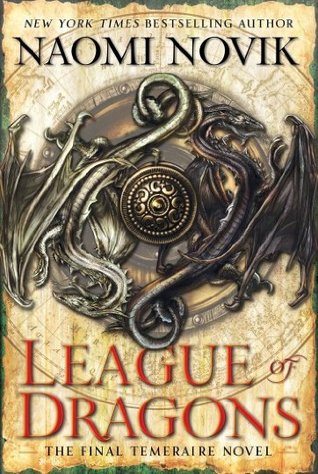
League of Dragons by Naomi Novik

5) The Temeraire series

This series came to its end this year, which is sad, as I loved the dragons. (With the possible exception of the first three books, Naomi Novik has been better at writing her draconic characters than her human ones.) I think the series did come to a (mostly) satisfying end, but serious plot and pacing problems with this book prevented me from placing the series any higher.

Three Parts Dead by Max Gladstone

4) The Craft Sequence

This series takes a little different tack than some--here we have a shared world with different main characters, at least in the books I read. (I will admit I didn't read all the books in these series; there simply wasn't time. But I read enough of each to get a sense of the characters and story, and I felt I was able to fairly judge them.) Max Gladstone's worldbuilding is intricate and complex, unique in urban fantasy (by the third book, I didn't think it was "urban" anymore, if it ever was). It suffers a bit from not having a single consistent main character, though.

Leviathan Wakes by James S.A. Corey

3) The Expanse

I love the TV adaptation of these books on Sy Fy. Of course, we're talking about the print series here, which is an entirely different beast. These are fat books with complicated plots and multiple POVs. Most of the time I don't particularly care for the latter, preferring to stick with one protagonist; but in this series, the author makes it work. It helps that in this universe, the politics of Earth/Mars/the Belt (and beyond, as revealed in book #3, Abaddon's Gate) is as fascinating as the "kickass space opera" aspects. I may have ended up placing the series in this slot, but I did so by a hair.


2) The Vorkosigan Saga

Honestly, I expect Lois McMaster Bujold to win this category. (I placed this series second basically by a coin toss.) Aral Vorkosigan, Cordelia Naismith and Miles Vorkosigan are three of the great characters in science fiction, and Bujold already has four Hugos for works in this series (three Best Novel awards, for The Vor Game, Barrayar and Mirror Dance, and Best Novella for "The Mountains of Mourning"). It's space opera in its grandest form, with interstellar wars, culture clashes, and a physically limited hero who has to outthink his opponents rather than outfight them.

The Winter Long by Seanan McGuire

1) The October Daye series

Urban fantasy, as a genre, is generally overlooked at the Hugos. If the Best Series category goes forward, that would be one way of remedying this. (I had several urban fantasy series on my own ballot.) For me, a successful series has to have A) a great central character; and B) complex worldbuilding. This series definitely delivers the goods. Toby Daye has an unforgettable voice, and Seanan McGuire's Faerie is fascinating.

Next: Best Fan Writer, and finally, Best Novel


July 14, 2017

Hugo Voting: The Campbell for Best New Writer (or, The Infamous Not-A-Hugo)


The finalists for the John W. Campbell Award for Best New Writer:

Sarah Gailey (1st year of eligibility)
J. Mulrooney (1st year of eligibility)
Malka Older (2nd year of eligibility)
Ada Palmer (1st year of eligibility)
Laurie Penny (2nd year of eligibility)
Kelly Robson (2nd year of eligibility)

My ballot:

7) J. Mulrooney

What the...? Yuck. And that's all I have to say about that.

6) No Award

5) Malka Older

Her stories didn't impress me, unfortunately.

4) Kelly Robson

Kelly Robson seems to have more of a science-fictional edge to her writing (at least in two out of the three stories--unfortunately, I couldn't get into "Waters of Versailles"), and "The Three Resurrections of Jessica Churchill" was the best of her offerings. However, I didn't like her stories as well as the top three.

3) Sarah Gailey

Sarah Gailey has written some good short stories in the past few years, ranging from funny to sad to tragic. She's also the author of the Women of Harry Potter series at Tor.com, which in some ways serves as a better showcase of her writing than her stories. However, she doesn't yet have Laurie Penny's dark rapier edge, or Ada Palmer's skill at juggling multiple plot, character and theme threads like spinning dinner plates, keeping everything in the air when by all rights it should come crashing down.

2) Laurie Penny

I thought Laurie Penny's novella, Everything Belongs To the Future, was just so-so. But I took a look at the short stories included in the Hugo packet, and I'm glad I did. They were surprisingly good. One of them, "The Killing Jar," was a taut little horror thriller about English Fine Arts serial killers (which is a seriously bonkers idea, but she makes it work), and another, "Blue Monday," was a sly behind-the-scenes satire about all those cutesy YouTube puppy, kitten and baby videos. There is an idiosyncratic sideways twist to these stories, sort of a dark bloody version of Emily Dickinson's "Tell the truth but tell it slant," that makes you want to keep reading.

1) Ada Palmer

I think if there's one thing that's a shoo-in on this year's ballot, it's Ada Palmer. Her novel Too Like the Lightning made too big a splash, and had too many people talking about it, whether or not they liked it. I'm not sure I liked it myself; it was a dense, difficult, hard-to-understand read, bursting at the seams with philosophy, swelling with infodumps, and possessing a glacially slow plot and an unreliable narrator who not only frequently breaks the fourth wall to argue with his hypothetical future reader, he also turns out to be quite the monster himself. But while I think her book was an ambitious sprawling mess, I can't deny Ada Palmer's skill as a writer. She knows her Enlightenment history and her philosophers, and she took my hand and guided me through her mess of a novel, by writing one more scene I had to finish, and one more...until I turned the last page of the book.

Next up: Deep breath. Tomorrow is the last day of voting, and I've got to get it done.

July 12, 2017

Hugo Voting: Best Related Work


The nominees for Best Related Work (and hoo boy, is it wonderful to have some actual legitimate nominees again, after the Puppi-poo trainwrecks of the past two years):

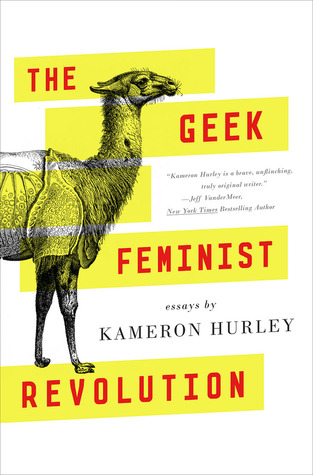
The Geek Feminist Revolution, by Kameron Hurley (Tor Books)
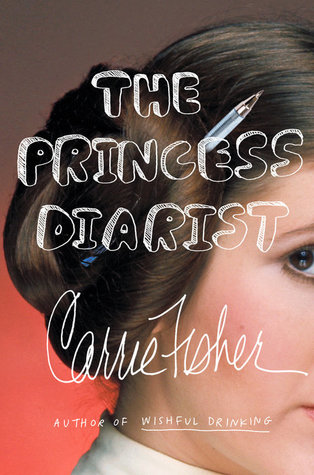
The Princess Diarist, by Carrie Fisher (Blue Rider Press)
Traveler of Worlds: Conversations with Robert Silverberg, by Robert Silverberg and Alvaro Zinos-Amaro (Fairwood)
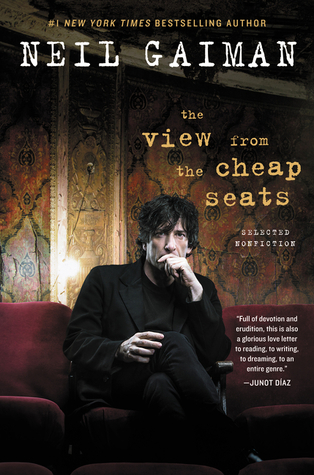
The View From the Cheap Seats, by Neil Gaiman (William Morrow / Harper Collins)
The Women of Harry Potter posts, by Sarah Gailey (Tor.com)
Words Are My Matter: Writings About Life and Books, 2000-2016, by Ursula K. Le Guin (Small Beer)

My ballot:

Traveler of Worlds: Conversations with Robert Silverberg

6) Traveler of Worlds: Conversations With Robert Silverberg

This was...okay, I guess, but you'd really have to be a Robert Silverberg fan to love it. I'm not.

The Princess Diarist by Carrie Fisher

5) The Princess Diarist

I wouldn't be at all surprised if this won, after Fisher's untimely death. I gave it four stars on Goodreads on my first reading, but a little distance and time has made me reconsider that down to three. This is not to say I didn't like this book...I did. Carrie Fisher was a woman of wit and wisdom, unfortunately battling her demons to the very end, and a damn fine writer. But looking back, this book seems a bit on the lightweight side to me now, especially in comparison to the books further up the list.

4) The Women of Harry Potter posts, Tor.com

This is a little difficult comparison to make, as we have five short articles, 12 pages total, stacked up against five full-length books. That said, these articles are well-thought-out, punchy and to the point, and have a lot to say about the world of Harry Potter. They make sense even to someone who has never read a HP book (like me). I particularly liked the article about Ginny Weasley.

The Geek Feminist Revolution by Kameron Hurley

3) The Geek Feminist Revolution

Kameron Hurley is one of my favorite authors, and I've read a lot of these essays on her blog before they were collected into this book. (As one of her Patrons, I also receive a podcast from her every month, which I really look forward to. She has a lot to say, and she's hilarious.) Her writing is fierce, funny, pithy and brutally honest, and her feminist lens informs every essay in this book.

The View from the Cheap Seats by Neil Gaiman

2) The View From the Cheap Seats

I don't think Neil Gaiman has ever been more thoughtful than in this collection, which is a grab-bag of introductions written for other authors' books, transcribed speeches, articles, interviews, reviews...just about every possible iteration of non-fiction writing is represented here. But every bit of it is recognizably Neil Gaiman, with his laidback demeanor and wry British drollery.  This is a book to be read slowly and savored.

Words Are My Matter: Writings About Life and Books, 2000-2016 with a Journal of a Writer's Week

1) Words Are My Matter: Writings About Life and Books, 2000-2016

Sometimes books take a while to seep into your brain and take root. You may think you've taken their measure at the time, but as the days slip by and sentences and fragments of essays pop into your mind at all sorts of odd moments, you realize a book made a far deeper impression on you than you first thought. This happened to me with this book. I originally gave it three stars, mainly on the strength of Le Guin's beautiful, erudite prose: poetic and precise, with nary a word wasted. The section of the book that dragged the overall rating down for me (or so I first thought) was the final third, "Book Reviews," because the books she was discussing didn't sound like my kind of thing at all. But looking back, I can see those well-argued reviews were fascinating in and of themselves, even if I don't think I'll ever read many of their subjects. So in rethinking this book (and especially remembering the essay that alone was worth the price of admission, "What It Was Like," a gut-punch of a short speech about life for American women before Roe v. Wade), it has to take my No. #1 slot. Ursula K Le Guin is simply a national treasure.

Next up: John W. Campbell Award for Best New Writer


July 10, 2017

Hugo Voting: Best Novella (or, The Little Novels That Could)


The nominees for Best Novella:

The Ballad of Black Tom, by Victor LaValle (Tor.com publishing)
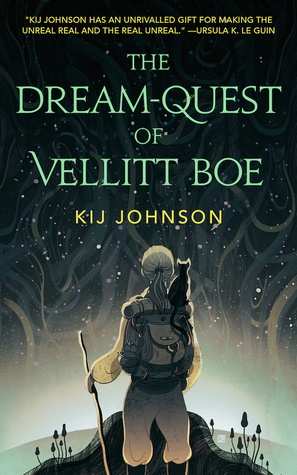
The Dream-Quest of Vellitt Boe, by Kij Johnson (Tor.com publishing)
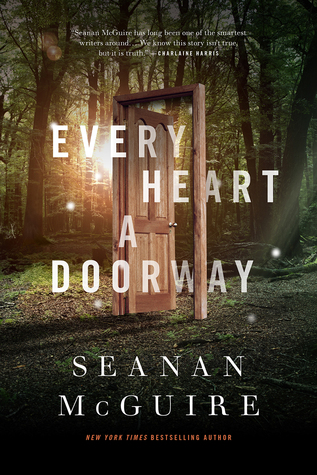
Every Heart a Doorway, by Seanan McGuire (Tor.com publishing)
Penric and the Shaman, by Lois McMaster Bujold (Spectrum Literary Agency)
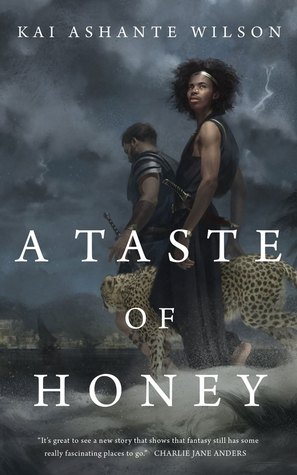
A Taste of Honey, by Kai Ashante Wilson (Tor.com publishing)
This Census-Taker, by China MiƩville (Del Rey / Picador)

I have a bit of an edge here, as I've already read and reviewed all but one of these! So I'm going to quote a bit from my Goodreads reviews.

This Census-Taker

7) This Census-Taker

From various descriptions I've read of this, I figured I would bounce off it, and sure enough, that's what I did. I did give it a hundred pages, but since it still seemed to be a meandering mess and I had yet to care about any of the characters, I set it aside.

A Taste of Honey by Kai Ashante Wilson

6) A Taste of Honey

I didn't like this at all. I gave it only one star. Between the frothy, artsy-fartsy writing, a vain arrogant peacock of a protagonist who grated on me to no end, and the fact that [rot-13] guerr-sbheguf bs guvf obbx gheaf bhg gb or abguvat zber guna na nygreangr gvzryvar qernz, juvpu zrnaf gur punenpgre V yvxrq orfg arire rkvfgrq...bah. No thank you.

5) No Award

Penric and the Shaman (Penric and Desdemona, #2)

4) Penric and the Shaman

The first novella in this series, Penric's Demon, is a delight. This one, not so much. For me, that was entirely due to the fact that we didn't spend very much time inside Penric's head. The World of the Five Gods is, as always, quite interesting, but this is just so-so.

The Ballad of Black Tom by Victor LaValle

3) The Ballad of Black Tom

This was just half of a good book, suffering from what was, to me, an unnecessary POV shift part of the way through. It's the first of two Lovecraft reimaginings on this year's ballot, a retelling of the (in)famous "The Horror At Red Hook." It's unfortunate; with a little tighter storytelling, this could have been great.

Every Heart a Doorway by Seanan McGuire

2) Every Heart a Doorway

I gave this a solid four stars. This is a story for everyone who didn't fit in, who found their place in the world (or rather in a different world) and was violently pulled out of it, and who would do anything to get back. There's a murder mystery, but that's not the most interesting part of this; the characters shine here, and this story is exactly the length it needs to be.

The Dream-Quest of Vellitt Boe by Kij Johnson

1) The Dream-Quest of Vellitt Boe

This is definitely at the top of my heap, starting with the main character: 55-year-old Vellitt Boe, a middle-aged woman in charge of her own story, and determined not to be a footnote to a man's. This is again a retelling of one of H.P. Lovecraft's stories, "The Dream Quest of Unknown Kadath," but my not having read its predecessor didn't stop me from thoroughly enjoying this tale. The ending is somewhat abrupt, but that's a minor quibble; the journey itself is the point, and I would love to see what Vellitt does next.

Next up: Best Related Work


July 9, 2017

Hugo Voting: Best Fan/Semiprozine


The nominees for best fanzine:

Castalia House Blog, edited by Jeffro Johnson
Journey Planet, edited by James Bacon, Chris Garcia, Esther MacCallum-Stewart, Helena Nash, Errick Nunnally, PĆ”draig Ɠ MĆ©alóid, Chuck Serface, and Erin Underwood
Lady Business, edited by Clare, Ira, Jodie, KJ, Renay, and Susan
nerds of a feather, flock together, edited by The G, Vance Kotrla, and Joe Sherry
Rocket Stack Rank, edited by Greg Hullender and Eric Wong
SF Bluestocking, edited by Bridget McKinney

My ballot:

6) Journey Planet

The issues on offer in this year's Hugo packet didn't appeal to me at all, unfortunately. They were just all over the place, and dragged down by some seriously bad covers.

5) Castalia House Blog

Eh. This actually wasn't too bad, despite its association with a seriously nasty person and his publishing company. Enough so that I'm not putting it under No Award. But it doesn't have the quality of those ranked above it.

4) Nerds of a Feather, Flock Together

This fanzine runs along similar lines as other zines in this category: book, movie, game reviews. Joe Sherry seemed to write most of the better articles. However, there is a multitude of authors on this site, and they don't seem to have the unified vision and consistent tone that other sites offer.

3) Rocket Stack Rank

This fanzine is definitely for the mathematical and algorithm-inclined. It concentrates on short fiction, rating every single story in several magazines and anthologies published throughout the calendar year. The reviewers have well-thought-out standards and explain exactly what they're looking for. From what I've seen, the overwhelming majority of their ratings are three-star, or just "average," so when they mark a story as four or five-star, it makes the reader sit up and take notice.

2) SF Bluestocking

I have this fanzine in my RSS feed folder, and Bridget McKinney's Hugo packet well illustrates why: she's a thoughtful, incisive reviewer, with plenty to say about books as well as SFF TV shows. Her review of the best episode of The X-Files Season 10, "Mulder and Scully Meet the Were-Monster," is dead-on as regards both the characters and the show. She also does a great job of deconstructing some not-so-good Game of Thrones episodes. (I do love a snarky takedown, but an intelligent snarky takedown is a fairly rare thing, and that's what McKinney does here.)

1) Lady Business

I nominated this fanzine this year and last, and I really hope they get the rocket this time around. This is a fanzine of multiple authors, which can be a detriment if there isn't a strong unifying editorial theme. However, Lady Business, as its name indicates, has this strong editorial theme--looking at fandom through an incisive feminist lens. By doing so, what could have been, for instance, a fluffy article about the costumes in Star Wars turns into an interesting commentary on the female roles of the franchise.

The nominees for Best Semiprozine:

Beneath Ceaseless Skies, editor-in-chief and publisher Scott H. Andrews
Cirsova Heroic Fantasy and Science Fiction Magazine, edited by P. Alexander
GigaNotoSaurus, edited by Rashida J. Smith
Strange Horizons, edited by Niall Harrison, Catherine Krahe, Vajra Chandrasekera, Vanessa Rose Phin, Li Chua, Aishwarya Subramanian, Tim Moore, Anaea Lay, and the Strange Horizons staff
Uncanny Magazine, edited by Lynne M. Thomas & Michael Damian Thomas, Michi Trota, Julia Rios, and podcast produced by Erika Ensign & Steven Schapansky
The Book Smugglers, edited by Ana Grilo and Thea James

My ballot:

6) Cirsova

Cirsova harkens back to old-time pulp, or "heroic fantasy," magazines. It seems to be a good example of its genre, if you like that kind of thing. I don't, particularly.

5) Beneath Ceaseless Skies

This magazine (or at least the issue in the packet) only offers stories, not poems, reviews or articles. I find I prefer a magazine with the latter, as it seems more well-rounded. (That said, there are some good stories in this issue, the Kameron Hurley in particular.)

4) GigaNotoSaurus

This magazine is that rarest of beasts: a home for longer SFF stories. Rashida J. Smith picks some excellent stories, including "Brushwork," by Aliya Whiteley, one of my Best Novelette nominees this year.

3) Strange Horizons

Their offering in the Hugo packet is the delightful July 2016 issue, "Our Queer Planet," featuring the work of queer authors, poets and essayists. Standouts include the story "Her Sacred Spirit Soars," by S. Quioyi Lu, the column "Did You Mean A Romantic?" by Penny Stirling; and the poem "Sawa," by Karolina Fedyk.

2) Uncanny Magazine

Uncanny was the well-deserved Best Semiprozine winner last year. This year's quality is similar, but I think it's going to miss my #1 spot by a hair.

1) The Book Smugglers

Stories, reviews, snarky X-Men and Mary Sue articles: I really liked this magazine. It surprised me a little, as I would've thought nothing could beat out Uncanny; but this magazine managed to do it.

Next up: Best Novella

(I just checked to see the Hugo voting deadline is midnight Pacific [US] time Saturday July 15. I think I'm going to need every minute of it. Wish me luck.)

July 6, 2017

Hugo Voting: Best Graphic Story (or, "Comics Are a Gateway Drug To Literacy")


(Title quote from Art Spiegelman.)

These are the nominees for Best Graphic Story.

Black Panther, Volume 1: A Nation Under Our Feet, written by Ta-Nehisi Coates, illustrated by Brian Stelfreeze (Marvel)

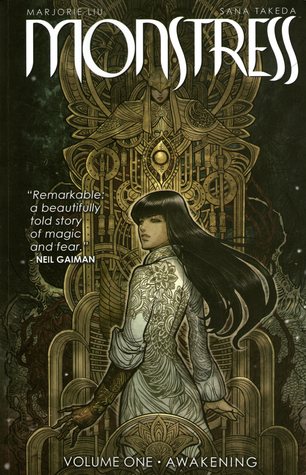
Monstress, Volume 1: Awakening, written by Marjorie Liu, illustrated by Sana Takeda (Image)

Ms. Marvel, Volume 5: Super Famous, written by G. Willow Wilson, illustrated by Takeshi Miyazawa (Marvel)

Paper Girls, Volume 1, written by Brian K. Vaughan, illustrated by Cliff Chiang, colored by Matthew Wilson, lettered by Jared Fletcher (Image)

Saga, Volume 6, illustrated by Fiona Staples, written by Brian K. Vaughan, lettered by Fonografiks (Image)

The Vision, Volume 1: Little Worse Than A Man, written by Tom King, illustrated by Gabriel Hernandez Walta (Marvel)

I originally thought this category would be one of the easier ones, as I have already read four out of the six, nominated them, and own them to boot. Nope. I'm still going round and round with the top three, and which one ends up at #1 depends on the day of the week.

ADVANCE REVIEW: SAGA #1 (Spoiler Free)

7) Saga, Volume 6

I know this is a minority opinion, but I do not like this comic. The Eight Deadly Words applies, and has every time I've tried to read it.

6) No Award

Black Panther graphic novels, books, trade paperbacks and hardcovers ...

5) Black Panther, Vol. 1: A Nation Under Our Feet

This is an admirable beginning, but you can tell Ta-Nehisi Coates is a comics newbie. I would call this first volume essentially a learning curve. All the pieces are there, and the plot has been set in motion, but the whole thing is a little disjointed. I expect the story to improve in Volumes 2 and 3, which are patiently awaiting me atop Mount TBR. (Brian Stelfreeze's art is quite good, however.)


4) Paper Girls, Volume 1

This surprised the heck out of me. I liked it far more than I thought I would (enough to order Vol. 1-2, and preorder Vol. 3). It's a story of female bonding and sistas doin' it for themselves; a sci-fi time travel saga; an alternate-worlds kill-the-monster horror tale; and a mystery wrapped and tied with a pretty 80's pop-culture bow. (As evidenced by the werewolf wearing a Guns n'Roses t-shirt.) It ends on a cliffhanger, which is something of a downer, but Brian K. Vaughn is telling a far better story here, in my opinion, than Saga.

(These were the three easy choices. Now I start gnashing my teeth.)

the world world marvel comics it is marvel marvel marvel heroes ...

3) Ms. Marvel, Vol. 5: Super Famous

Kamala Khan is just a sweetheart. I love her family, I love her interactions with her friends, I love her endless struggle between being a superhero and a normal teenager, and I love her screwing up because of it. I also love the fact that both G. Willow Wilson and her character are unapologetic Muslims, which takes a lot more courage now than it used to.

(Argh!! Flip coins. Draw straws. Close eyes and point.)

Visione volume 1 | Un po' peggio di un uomo | Panini Comics | Tom King ...

2) The Vision, Vol. 1: Little Worse Than a Man

This is actually the first half of a complete, self-contained story (and on my ballot, I nominated both Volumes 1 and 2). As the title (from The Merchant of Venice) indicates, this is a Shakespearean tragedy in graphic novel form. It's dark and sad and thoroughly adult, with (fortunately) a tiny glimmer of hope on the last page.

Monstress, Vol. 1 by Marjorie M. Liu

1) Monstress, Volume 1: Awakening

Sana Takeda's sublime art and Marjorie Liu's worldbuilding are what tipped this one to the top. (At least for today.) This would be a damn fine fantasy series in written form, with its magic, Lovecraftian feel and Egyptian tone, and centuries of history, discrimination and bloodshed (and talking cats with multiple tails), but the outstanding art gives Monstress the edge.

Next: Best Fanzine/Semiprozine

July 5, 2017

Hugo Voting: Best Fan/Professional Artist


"The purpose of art is washing the dust of daily life off our souls."  ~Pablo Picasso

"A work of art is above all an adventure of the mind."  ~Eugene Ionesco

The nominees for Best Fan Artist:

Ninni Aalto
Elizabeth Leggett
Vesa Lehtimaki
Likhain
Spring Schoenhuth
Steve Stiles

My ballot:

6) Ninni Aalto

Eh, except for the angry green bulbous-headed Martian, their samples are just so-so. As is their website.

5) Likhain

Their samples are filled with lots of colors, bright and frenetic. Not really to my taste.

4)Steve Stiles

A little more cartoony than I like,  I think. The packet includes a link to his Tumblr, which shows a wry sense of humor to some of the drawings, but not enough to push him all the way to the top.

3) Spring Schoenhuth

Some gorgeous craft work, especially the Klingon bat'leth necklace.

2) Vesa Lehtimaki

Obviously a Star Wars fan. :) Reimagining the Mos Eisley cantina scene in Legos ("Odd Night Out")? Cool. The underwater photos on their Flickr set are pretty interesting.

1) Elizabeth Leggett

Wow. Nice. "Zoom" reminds me of one of the first fantasy books I can remember reading, Beverly Cleary's The Mouse and the Motorcycle. "Hotspur" looks like something out of Farscape.

The nominees for Best Professional Artist:

Galen Dara
Julie Dillon
Chris McGrath
Victo Ngai
John Picacio
Sana Takeda

My ballot:

6) Chris McGrath

Chris McGrath's faces are unique--you can instantly recognize that this is one of their covers. That said, those same faces are not really my thing.

5) John Picacio

Lots of reds and yellows in his work. Okay but didn't grab me.

4) Julie Dillon

She has several book and magazine cover credits, the best of which seem to be her covers for Clarkesworld.

3) Galen Dara

I've seen a lot of Galen's work already, as she keeps doing covers for Kickstarters I back. The Long List Anthology, vol. 2 cover was gorgeous.

2) Victo Ngai

Oooh. Victo Ngai's stuff is outstanding, a bit surreal and finely detailed. Colors are balanced and not overly in your face.

1) Sana Takeda

I loved loved loved the art for Monstress (which everyone should read, by the way. I can't wait for vol. 2). Her panels made the comic as much as the story.

Next up: Best Graphic Story


July 4, 2017

Hugo Voting: Best Editor, Long/Short Form (or, "So the Writer Who Breeds More Words Than He Needs, is Making a Chore For the Reader Who Reads")


(FYI, the above quote is by Dr. Seuss.)

The nominees for Best Editor, Short Form:

John Joseph Adams
Neil Clarke
Ellen Datlow
Jonathan Strahan
Lynne M. Thomas & Michael Damian Thomas
Sheila Williams

These are all legitimate nominees, thankfully. That will not be true in the next category.

My ballot:

6) Sheila Williams

Unfortunately, Sheila's sample in the packet--the Oct/Nov double issue of Asimov's Science Fiction--didn't particularly impress me.

5) Ellen Datlow

Ellen Datlow edits for Tor.com, as well as original and reprint horror anthologies. Unfortunately, the list she provided in the packet included several stories I'd read previously and didn't care for very much.

4) Neil Clarke

Neil Clarke edits Clarkesworld, which I support via its Patreon. His entry in the packet included the Clarkesworld 10th Anniversary Issue, along with a list of works edited in 2016, and works in anthologies/nominated for other awards/on the Locus Recommended Reading List. He picks some good stories, but I didn't like them as well as the top three.

3) Jonathan Strahan

Strahan edited one of my favorite novellas from last year, The Dream-Quest of Vellitt Boe. His listings in the packet also include The Best Science Fiction and Fantasy of the Year, Volume 10, which featured quite a few stories I've read and liked.

2) John Joseph Adams

I don't know when this man sleeps. He seems to have his fingers in just about every pie you can name. When I opened his folder in the Hugo packet, I nearly choked--there was five hundred pages of stories he edited for Lightspeed Magazine, as well as a list of twenty-nine anthologies he has edited or co-edited. (Several of which I already own.) Obviously I couldn't read all five hundred pages, but I recognized several stories I'd read previously and really liked. Sampling a few others confirmed that I like his editing style and choice of material.

1) Lynne M. Thomas/Michael Damian Thomas

The Thomases edit Uncanny Magazine, winner of last year's Hugo for Best Semiprozine. I subscribe to this magazine and know its quality well, but in going through their packet I was particularly impressed by their nonfiction articles. Their editing makes Uncanny a tremendous, well-rounded magazine.

The nominees for Best Editor, Long Form:

Vox Day (aka Theodore Beale)
Sheila Gilbert
Liz Gorinsky
Devi Pillai
Miriam Weinberg
Navah Wolfe

My ballot:

One name (can you guess who?) is going to be left off entirely. It's not only that he's an all-around nasty person--that is true, but it has nothing to do with his editing ability. (Such as it is, or rather isn't.) But everything edited by him I've ever read, including his own work, has pretty much melted my eyeballs with its sheer incompetence. (Also, as has been the case for the past two years, he used his "minions" to game himself onto the Hugo ballot. One would think he'd eventually get tired of finishing below No Award.)

I also must comment on the material included in the packet. Sheila Gilbert and Navah Wolfe included sample chapters from novels they edited, which gave a better basis for comparison as opposed to simple lists. Now, I realize copyright issues and/or publishing house policies may play into this. And goodness knows this year's Hugo packet has my computer bulging at the seams already. Nevertheless, this should be something for other nominated LF editors to consider in the future.

5) Miriam Weinberg

Same dilemma here as for Pillai (see next slot), with the only book of hers I've read I liked okay,  but not in orbiting sock territory.

4) Devi Pillai

She edited one of the best books I read last year, N.K. Jemisin's The Obelisk Gate. I've heard good things about Lila Bowen's Wake of Vultures as well, but when you've only read one example of an editor's output (and you're swamped for time to read everything before the voting deadline as it is) that editor is bound to suffer in the final rankings. (hinthint *sample chapters* hinthint)

3) Liz Gorinsky

Gorinsky has the unenviable distinction of having edited two books I really didn't like, Cixin Liu's The Dark Forest and Death's End. I'm afraid that had I been in her shoes, I wouldn't have been able to stop myself from beating Mr. Liu over the head with his pages upon pages of infodumps. Still, I suppose she deserves credit for shaping the latter mess into something that could be nominated for a Hugo (even though sure as hell am not voting for it) and win the Locus Award for Best SF Novel.

2) Sheila Gilbert

Sheila Gilbert has edited several of my favorite authors, including Jim Hines, Julie E. Czerneda, and Seanan McGuire. She's equally at home with lighthearted fantasy, space opera, and steampunk.

1) Navah Wolfe

I like Saga Press; they publish quality books that seem to fly a little under the radar. (This opinion is in large part due to their having published Kameron Hurley's The Stars Are Legion, a book I will rave about to anyone who asks, or doesn't ask.) Wolfe's samples reveal several books that seem right up my alley. (Looks at Mount TBR, teetering haphazardly next to the ceiling. Sighs. Clicks over to Amazon.)

Next up: Best Fan/Professional Artist

July 2, 2017

Hugo Voting: Best Novelette (or, the Great, the Good and the Ugly)


Now we've reached the Novelette category, defined as stories between 7500 and 17,500 words.

The nominees:

  • Alien Stripper Boned From Behind By The T-Rex by Stix Hiscock (self-published)
  • “The Art of Space Travel” by Nina Allan (Tor.com, July 2016)
  • “The Jewel and Her Lapidary” by Fran Wilde (Tor.com Publishing, May 2016)
  • “The Tomato Thief” by Ursula Vernon (Apex Magazine, January 2016)
  • “Touring with the Alien” by Carolyn Ives Gilman (Clarkesworld Magazine, April 2016)
  • “You’ll Surely Drown Here If You Stay” by Alyssa Wong (Uncanny Magazine, May 2016)
My ballot:

Let's get the ugly part out of the way first. The only reason there's an alien stripper, a T-Rex, and a lurid nastybone on the Hugo ballot is due to the petty spite of one Theodore Beale, aka Vox Day, who was thoroughly thrashed in an online altercation twelve years ago and has had a vengeful hard-on for John Scalzi, Patrick and Teresa Nielsen Hayden, and Tor Publishing ever since. He's tried to wreck the Hugos two years running, but due to new rules that took effect with this year's ballot, he's reduced to wanking out incoherent nonsense nominations like this one. 

The one I feel sorry for (sort of) is Ms. Stix, who apparently doesn't realize she's being paraded around like a sacrificial goat for Mr Beale's ego. On the other hand, she could have turned down the nomination, so I can't find it in my heart to get too worked up over her inevitable loss. 

We don't need to discuss the so-called "quality" of her story, do we? Yes, I did read it, just as I read John C. Wright's bovine excrement, and that's thirty more minutes of my life I need back. Suffice it to say that national treasure Chuck Tingle does this sort of thing far better, and has a niftier sense of humor to boot. 

6) No Award

5) "The Art of Space Travel"

This is...okay. Not outstanding. It's the story of a daughter in search of her father, and her relationship with her mother, superimposed over what is essentially the background detail of the first manned Mars mission. The SF element is minimal. I suppose one could call this a "literary" SF story, but Ursula K Le Guin does it better.  

4) "The Jewel and Her Lapidary"

This is quite a grim little story, of sentient gems that have power, of Lapidaries that wield and control their power, and who in their turn are bound to the Jewels, the rulers of the kingdom. The focus is on the last Jewel and Lapidary in the face of an invasion, and what each girl is willing to sacrifice for the other, and for their country. I liked it, but not as well as the top three.

3) "Touring With the Alien"

I nominated this. It's an extremely well written story, with some fascinating ideas about consciousness and self-awareness that remind me of the work of Peter Watts. The only drawback is the ending, and how much of a letdown that is depends on your point of view--if the main character is the betrayer of humanity, or not. The moral complexity of the ending is similar to the recent zombie film, "The Girl With All the Gifts" (which I thought was really good).  

2) "The Tomato Thief"

My top two stories are both desert stories, Southwestern stories, full of myths and legends, and gods and death. This one is the quieter of the two, with the rhythms of folklore, which is Ursula Vernon's trademark. Grandma Harken, the hero of the Nebula-winning "Jackalope Wives," returns, and the search for whatever is stealing her tomatoes turns into something of an epic quest, with avian shapeshifters, folded realities, and train gods. The world is fascinating. 

1) "You'll Surely Drown Here If You Stay"

I didn't care much for Alyssa Wong's previous story, but this one is firing on all cylinders. A large part of that is due to her skill in using a rather difficult POV--second person, present tense. (I've done it. It is not easy.) She creates an entire distinct character out of all those "you's," and I slipped into the skin of that character on her beautiful flowing prose. This is a bittersweet weird Western, with rattling bones and living deserts, and a young boy who sacrifices his humanity to give his dearest friend a chance for a good life. I thought "Wow" when I first read it, and I think that even more so now. 

Next: Best Editors, Long and Short


July 1, 2017

Hugo Voting: Best Dramatic Presentation, Long Form (or, Hugo Goes To the Movies)


To continue with my Hugo voting, here is my ballot for BDP-LF.

The nominees:

Arrival, screenplay by Eric Heisserer based on a short story by Ted Chiang, directed by Denis Villeneuve (21 Laps Entertainment/FilmNation Entertainment/Lava Bear Films)

Deadpool, screenplay by Rhett Reese & Paul Wernick, directed by Tim Miller (Twentieth Century Fox Film Corporation/Marvel Entertainment/Kinberg Genre/The Donners’ Company/TSG Entertainment)

Ghostbusters, screenplay by Katie Dippold & Paul Feig, directed by Paul Feig (Columbia Pictures/LStar Capital/Village Roadshow Pictures/Pascal Pictures/Feigco Entertainment/Ghostcorps/The Montecito Picture Company)

Hidden Figures, screenplay by Allison Schroeder and Theodore Melfi, directed by Theodore Melfi (Fox 2000 Pictures/Chernin Entertainment/Levantine Films/TSG Entertainment)

Rogue One, screenplay by Chris Weitz and Tony Gilroy, directed by Gareth Edwards (Lucasfilm/Allison Shearmur Productions/Black Hangar Studios/Stereo D/Walt Disney Pictures)

Stranger Things, Season One, created by the Duffer Brothers (21 Laps Entertainment/Monkey Massacre)

My rankings:


(Would that he had stayed there...)

7) Deadpool

Sometimes a snarky asshole is just a snarky asshole. I watched about fifteen minutes of this before I decided this one had no redeeming value.

6) No Award


(She should have been the real star.)

5) Ghostbusters

Laying aside the whole remake-ate-my-childhood kerfluffle, this was just...okay. I'm happy it got made, Holtzmann was awesome, and Chris Hemsworth stole the show with his end credits dancing. But it's not something I would buy and keep for repeat viewings (unlike, say, Wonder Woman).


(Hey, aren't you supposed to be blue, Felicity?)

4) Rogue One

This was a dark and gritty Star Wars tale, in the same ballpark as Empire if not the same rarefied air. That said, it was also a most egregious example of Smurfette Syndrome, and the more I think about it the more irritated I get. As much as I like Chirrut and Baze, there was no in-story reason for them to default to male. We could just as easily have had Chirruth and Bazi, or Bodhiya Rook. (I would keep Diego Luna, however, as he's cuter than a junebug.) Honestly, I can understand affirmative-action laws, as absent some stiff legal prodding (or public shame) Hollywood still reverts to the sausage-fest.


(The real stars, Winona Ryder notwithstanding.)

3) Stranger Things, Season One

I never played Dungeons and Dragons, but I remember the 80's, and I nominated this. Sometimes Netflix's series (looking at you, Luke Cage, and even the excellent Jessica Jones to a degree) sag and drag in the middle, but this series' eight-episode run is the perfect fit. Millie Bobby Brown is outstanding.


(I just realized two of the movie's characters are transposed in this photo. Dorothy Vaughan, played by Octavia Spencer, is the woman in green on the right, and Taraji P. Henson, in the center, portrayed Katherine Johnson.)

2) Hidden Figures

For me, the best moment from the 2017 Academy Awards was when they wheeled 94-year-old Katherine Johnson out on the stage. Can you imagine, living long enough to see a successful and Oscar-nominated film about your life (and the lives of two of your fellow black women at NASA)? Who would have thought that a story about calculations on a chalkboard could be so riveting?


(It's a good thing this film was made before the election. Otherwise, we would've had the president* bleating out "Space Octopussy! Sad!" on Twitter.)

1) Arrival

If it had been any other year, Hidden Figures would have done it for me. But this is the year of Arrival, which has already won the Ray Bradbury Award for Outstanding Dramatic Presentation at the Nebulas. (Also, Amy Adams was simply cheated out of an Oscar nomination.) Not only is it based on one of the best SF stories ever written, Ted Chiang's "Story of Your Life," it does a very good job of translating that story's twisty concepts to the screen, in a manner that richly rewards a second viewing. It's a breath of fresh air to see a movie resolve its conflicts by talking, and understanding, rather than fighting.

Next up: Best Novelette


June 30, 2017

Hugo Voting: Short Stories


I'm on vacation through next week, and I intend to use my time to finalize my Hugo voting. (The deadline is July 15.) Let's start out with  my ballot for Short Story.

The nominees:

"Our Talons Can Crush Galaxies," Brooke Bolander, Uncanny Magazine, November 2016

"That Game We Played During the War," Carrie Vaughn, Tor.com, March 2016

"An Unimaginable Light," John C. Wright, God, Robot, Castalia House

"A Fist of Permutations in Lightning and Wildflowers," Alyssa Wong, Tor.com, March 2016

"Seasons of Glass and Iron," Amal El-Mohtar, The Starlit Wood: New Fairy Tales, Saga Press

"The City Born Great," N.K. Jemisin, Tor.com, September 2016

My rankings:

Left off ballot entirely: "An Unimaginable Light"

This story is, to put it plainly, an abomination. It was a cliche-ridden, thesauri-exploding, poorly constructed, badly edited, stupid polemic mess. For an author who constantly decries "message fiction," the message (politically correct robots bad, humans good) is so in your face as to drown out what little qualifies it to be considered a "story." Ugh. After reading this, I need that fifteen minutes of my life back, along with a gallon of brain bleach.

6) No Award

5) "A Fist of Permutations in Lightning and Wildflowers"

I generally love Alyssa Wong's work, but this one didn't quite connect with me. It was beautifully written, but in the end it just felt hollow.

4) "That Game We Played During the War"

This is a thoughtful exploration of war and its aftermath, and what it means to win and lose, as expressed through a telepath and a non-telepath playing a game of chess. (Although if we're talking about games expressing the human condition, it would have been much more interesting if Vaughn had had the characters play bridge.)

3) "The City Born Great"

Last year's Best Novel winner, N.K. Jemisin, wrote this as what she calls a "proof of concept" (e.g., a trial run) for a new series. It's a modern fantasy wherein certain cities in the world gain their own sentient life, and this story details the birth of New York. It's good in and of itself, but the series based on it (which I've had the privilege to see a possible outline for, as one of her patrons) promises to be fantastic.

2) "Our Talons Can Crush Galaxies"

This is short, brutal, and unforgettable. The author obviously had in mind the Hamilton tagline: "Who lives, who dies, who tells your story." This story is for the forgotten, fridged women in so many tales, wrapped in a beautiful, shimmering, righteous fury.

1) "Seasons of Glass and Iron"

This story really spoke to me. It's a reconstructed fairy tale of female friendship and women saving each other, told with lovely, understated prose. As with all the best fairy tales, it says so much about modern life, about abuse and gaslighting and double standards, and the poison heaped upon beautiful people.

(I also wish the Hugos had a Best Anthology category. The Starlit Wood was one of the best anthologies I've read in years.)

Next up: Best Dramatic Presentation, Long Form.