Showing posts with label Goodreads. Show all posts

July 23, 2026

Review: Emily Wilde's Encyclopaedia of Faeries

Emily Wilde's Encyclopaedia of Faeries Emily Wilde's Encyclopaedia of Faeries by Heather Fawcett
My rating: 4 of 5 stars

I hadn't read any of this series before or even heard of it, but I ended up really enjoying this book. That's one of the best things about voting for the Hugos--you find gems you might have otherwise overlooked.

This is in much the same vein as Marie Brennan's Memoirs of Lady Trent--a Victorian-era woman of science fighting sexism and studying fantastic creatures. In this case, it is fantastic magical creatures: the Fae. Emily Wilde is very much a female scientist of her era, rational and mostly unemotional (twice as much to be considered half as good). She is dedicated to the scientific method, even in the midst of crises, which makes for some pretty funny scenes, sometimes:

"Wendell!" I lunged forward, trying to wrench the roots away from him. They showed no interest whatsoever in me, nor Shadow, who pounced and worried at them until they fell away. But more rose to take their place.

"Why does it want you?" I cried.

"Why do you think, you cold-blooded lunatic of a woman?" he yelled, clawing at the ground. This was followed by a series of curses in what I assumed to be Irish.

I stabbed at the roots with my pocketknife. At the same moment, though, my mind was racing through stories, texts, journals. "Can you not--can you not say it?"

He gave me one of his impossibly green glares. We were nearing the base of the tree, where a hollow like a mouth had yawned open, black and writhing with roots like white worms. "No!"

"Oh," I breathed. My pocketknife was having little effect, but I kept up the stabbing nevertheless--I believe I stabbed him once, accidentally, for I had gone back into my mind. "You can't reveal to me that you're Folk--it must have been part of the enchantment that exiled you from your world. Isn't that it? I've heard of that--yes, that account of the Gallic changeling. And isn't it a peripheral motif within the Ulster Cycle? Bryston's theory was that--"

"Oh, God," he moaned. "She wants to discuss theory at a moment like this. I am doomed, aren't I?


The "Wendell" mentioned here is Emily's colleague, Wendell Bambleby, a vain, insufferable professor at Cambridge, who we eventually discover is an exiled Faerie king. Wendell follows Emily to her research assignment in the far-off country of Ljosland, and adventures and hijinks ensue. Wendell and Emily have a combative relationship, with much exasperation on Emily's part and plenty of razor-sharp dialogue flying back and forth. Of course, it comes out that Wendell is head over heels in love with Emily--in a typical understated, British stiff-upper-lip way and an even more traumatized king-of-Faerie way--and later on in the story he asks her to marry him. Emily doesn't turn him down, and at the end, at the scientific conference where they are presenting their joint paper about the discoveries they made in Ljosland, she seems to be entertaining the idea.

In between, Emily discovers more about Faerie and makes actual friends in Hrafnsvik, the village where she and Wendell spend the winter. She is a curmudgeon at the beginning of the story and a curmudgeon at the end, but she is beginning to understand the value of reaching out to other people.

I really liked this. It's told in a meticulous, journal-entry style, with footnotes, as befits a serious scientist. I doubt I would have paid attention to this had I not been reading it for the awards, but now that it's on my radar I'm going to pick up all three volumes.

View all my reviews

July 19, 2026

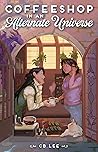
Review: Coffeeshop in an Alternate Universe

Coffeeshop in an Alternate Universe Coffeeshop in an Alternate Universe by C.B. Lee
My rating: 2 of 5 stars

This is another entry in the so-called "cosy" trend, as in "cosy young-adult fantasy romance." The spoiler is right there in the title: the two protagonists, Brenda Nguyen and Katherine "Kat" Woo, live in parallel universes linked by periodic fluctuating portals. Brenda's universe is ours; Kat's is our world, more or less, with an industrial revolution of magic instead of the internal combustion engine. (Which also means, for Kat's world, the existence of dragons, pixies, and other magical creatures, and nearly non-existent climate change, although capitalism is as rapacious in her universe as ours.)

Now, this could have been a very interesting scenario, with some thoughtful examination of the contrasts between the two universes, and an appreciation of the roads not taken in the magical one. Unfortunately, the author doesn't choose that route, instead settling for a meet-cute frothy romance between Brenda and Kat and some pretty thin, superficial worldbuilding. Which is obviously the direction she wanted to take, and more power to her. But in the end, that makes this story happy and bubbling with kambayas, and utterly forgettable. I did finish it, but I spent all of the back half longing for some grit in the gears, and a villain less cartoonish than the portal-crossing Shannon Mayfield. The book didn't necessarily need to be grim, but it did need a little more darkness than the author wanted to give it.

(Also? The silly subplot about reducing a dragon to the size of a cat and, conversely, making Brenda's friend Erica's cat Fancy the size of a minivan nearly threw me out of the story altogether. Because, really? Any house cat suddenly enlarged to be as big as a sabertoothed tiger would not be sweet and cute, but utterly terrifying. Look, I have two cats myself, and I love them, but I know for a fact if my fifteen-pound Mocha grew as large as a fucking Smilodon [maybe 1,000 pounds], I would run from him screaming, not try to ride him.)

That's pretty much the problem with the cosies I've tried to read, I think. They're okay while I'm turning the pages, and the characters usually hold my interest...and they vanish from my mind the instant I close the back cover. I like stories that are thought-provoking, and layered, and take some effort to tease out all the subtleties and facets. Those kinds of books stick with the reader long after they're finished. This one, unfortunately, didn't.

View all my reviews

July 12, 2026

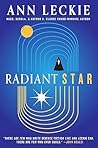
Review: Radiant Star

Radiant Star Radiant Star by Ann Leckie
My rating: 1 of 5 stars

I normally love Ann Leckie's books, but I could not get into this one. Part of that is that this is written in omniscient POV, and I am not a fan of head-hopping. Also, despite being set in the Imperial Radch universe, the worldbuilding felt thin. Finally, I could not figure out what the heck the titular object/MacGuffin the Radiant Star actually was (which probably would have been answered further on, but I didn't get that far). I persevered for nearly a hundred pages, but in the end, I didn't care enough about any of these people to continue.

Which is okay. Not every author's book is for every reader, and I love the original Imperial Radch trilogy enough to make up for this.

View all my reviews

June 26, 2026

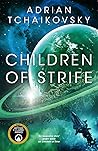
Review: Children of Strife

Children of Strife Children of Strife by Adrian Tchaikovsky
My rating: 5 of 5 stars

This is the fourth book in the Children of Time series, a far-future saga of humans' expanding into the stars, leaving behind a dead Earth, and terraforming other planets. These particular books (as are most of the author's books) are chunky both in the sense of sheer page counts and the weight of the ideas those pages hold. This particular story boasts three timelines set centuries apart, which nevertheless braid together neatly at the end. It's also a somewhat bleak cautionary tale of what happens when a group of entitled megalomaniac sociopaths are set free to indulge all their selfish baser instincts--at least until the climax, when they run up against a stronger force with no fucks left to give, which ends up restraining them for the good of everyone.

(One almost wishes there was an alien Mira on Earth right now who could stop the techbros, corporations and other conservative baddies currently wreaking havoc on our present timeline. But I digress.)

Despite this being the latest book in the series, this is more or less a stand-alone story. It helps to have read the other books, but it is not necessary. The author provides just enough background on the characters to bring the reader up to speed. What this book does is expand on events only given a passing mention in the previous volumes. (The reader is caught up on all this at the beginning of the story, in a nice precise three-page summary that sets the scene for what is to follow.) There are a few returning characters, in particular the sapient Portiid spiders Portia and Fabian, and the AI Avrana Kern, but the main focus is on the said group of rich sociopaths who end up terraforming an alien Earth-like planet with their own brand of genetically engineered, accelerated-evolution ecosystems. This becomes the planet Marduk of the present-day timeline, with its endlessly mutating monsters and plant life that can exist in vacuum. This planetary ecosystem, which is manipulated into becoming an organic computer capable of holding the uploaded minds of its creators after they die, takes over both the generation ark ship arrived from Earth's past and the present day Dissenter, an exploration ship captained by the best of the new characters (and the best character in the book, as far as that goes): the sapient mantis shrimp Cato.

I must stop to tout Cato in particular, because he really should have been the hero of this entire book. I realize the author was using multiple POVs to tell his story, and with the three separate timelines this was absolutely necessary--but I still wish Cato could have gotten far more page time than he did. His character journey was fascinating. The uplifted Stomatopods, in this universe, are bad-tempered, belligerent, pugnacious crustacean heavyweight fighters who would just as soon punch your head off as look as you, as Cato aptly demonstrates when he meets another of the main characters. But as we discover more of Cato's past and realize the genocide he was a part of, he reaches a turning point where he has a chance to give in to his primal urge to battle--and he backs down. In many ways, this is the most important plot point in the story, what Cato has learned because of what he did:

The feeling of failure and weakness burns through every segment of him. Only one sensation is worse. How he'd felt when the Portiid ships had found him. Sitting alone in his ship after the orgy of glorious battle that had been the Escalation. Coming to a realization of what they'd all done. The communal madness that had taken them, so they'd fought and fought. Seeking the searing inner reward of victory, which the weaponry and the distance attenuated, meaning instead of one defeated enemy they required ten, a hundred, a thousand. Chasing the hit, the dream of warrior greatness until...until...

Seventy-two survivors. Out of how many hundred thousand? And only that many still living because, by then, they were so far-spaced they couldn't find each other. Cato remembers.

He remembers that, when they found him, he would have fought them. Fought them and, in that madness, avoided facing up to what he'd done. Lost himself to the delusion of martial triumph. As with his own language, though, the Portiid communications let their emotional state bleed through. Incredulity, horror. Seeing himself through their many eyes.

His people were the best warriors, the hardest hitters. The stories they told themselves of their prowess, to cover for the fact that all the knowledge, all the tech, all the interstellar travel was the province of other species. So in that moment, he understood the Portiid rescue party saw things he'd blinded himself to. They saw the truth of what the Stomatopods had done with the star system they'd claimed. Turned it into a charnel house, drifting with wrecks and corpses. The old ways and the new technology; a terrible combination. He'd seen himself as they saw him, and realized he was a monster.


(It's too bad some of the other characters in the book couldn't have similar epiphanies--in particular the Elon Musk/Jeff Bezos knockoff, Gerey Hartmand, the ego-driven "Great Man" who sets all the genetically-engineered horrors of Marduk in motion. But don't worry, Hartmand gets what's coming to him, yes he does.)

This book is dense and chewy, both in story and theme. There are characters who attain godhood, and reject it to become human again; polar opposite characters who merge consciousness to find the two of them together are greater than either one alone; a devouring alien fungus who gives her all to hold on to her sense of self and recognition of the worth of other individual people; the guilt-ridden war criminal who manages to find another life; and, at the end, the rich sociopath who cannot, will not, change, only to find himself banished from everything and whose only future is to die alone. I've read plenty of Adrian Tchaikovsky's books, but this is one of his very best. You should not miss it.

View all my reviews

June 13, 2026

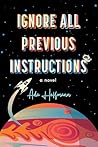
Review: Ignore All Previous Instructions

Ignore All Previous Instructions Ignore All Previous Instructions by Ada Hoffmann
My rating: 4 of 5 stars

I have all the volumes of this author's Outside trilogy, which features an autistic protagonist fighting against extradimensional god-like quantum AI computers. This book has similarities in some respects, including another autistic protagonist. But despite its setting of a future where humanity has spread throughout the solar system and the protagonist Kelli Reynolds makes her home on one of the moons of Jupiter, feels far closer to our world. This is because the antagonists are not sentient computers but predatory corporations which use generative AI to usurp most of the privileges and roles humans have in society. This reaches the point of trademarking every possible iteration of intellectual property and making it illegal for people to create their own entertainment--books, movies, literally any creative endeavor.

The result is a book which, in its way, is more horrifying than any godlike AI, because it feels almost inevitable.

Kelli Reynolds is a "script supervisor" for the streaming series Ship of Fools. She has helped create many of the characters for this popular show, but she does not write the storylines--rather, she edits what the generative AI spits out, and the percentage of input she has on the finished scripts is strictly regulated. Everything must be bland and inoffensive, with no political bias or viewpoints. These types of shows are immensely popular, because Universal Basic Income has been implemented in the Jovian system: a necessity since AI has taken most people's jobs and they have nothing else to do but sit home and watch this so-called "entertainment." The masses also get to vote on the directions the storylines take, the romances the characters have, et cetera.

The story starts with Kelli getting a message from an old girlfriend, a trans man who now goes by the name of Rowan. He wants her help with...something. At the beginning of the story, Kelli is more than a little naive and--I guess "accomodating" is the word, as we gradually discover something happened in her past that makes her reluctant to make waves. She goes with Rowan to another Jovian moon, and from there gets drawn into his life of crime, which involves stealing the "character kernel" of Orlando, the main character of Ship of Fools that Kelli created.

There is a parallel timeline running here, of Kelli and Rowan in the present and Kelly and Rowan's previous identity Amelia in the past. We gradually read the story of both their autistic/queer awakenings, as Kelli realizes she is gay and Rowan realizes he is trans. In this future, LGBTQ people are not quite illegal, but they are definitely discouraged from living their full authentic lives. This culminates in the suicide of Rowan's friend Elaine, and leads to the incident that breaks Kelli and Rowan's burgeoning romance. Elaine had sought therapy from another AI, and this tragically failed her:

It had done the thing the language model always did. It had done its level best to erase the truth of people like Am and Elaine and replace it with the most bland, palatable, averaged-out combination of words that it knew. And when Elaine needed help--with her sexuality and gender, or with whatever had happened with Oscar, or with who knew how many other complicated things--the model had erased the truth so hard that it erased her, too.

The people in charge had made it do that on purpose. They'd made all these laws, saying that you couldn't talk about any of this stuff with minors, for a reason. They'd thought it was worth losing a few Elaines so that they could keep not talking about it. Maybe they really believed this was better; maybe whatever they feared would happen, if they did let people talk about things, was awful beyond description. But the result was the same either way. It wasn't an accident. Someone, somewhere, had bloodlessly done that calculation and decided.


This is the story of Kelli throwing off the shackles of her society, both mind and body; it's also the story of Kelli and Rowan finding their way back to each other. The stakes here are far personal, with nary an alien or a galaxy-wide threat in sight. Yet in a way, this is more scary than a book of that sort, because with all the attacks levied on LGBTQ people in the past few years, this is a future you can easily see coming to pass. And then when you have the terrible corporations, like Kelli's employer Inspiration, adding to people's misery in the name of profit:

All these months she'd worked for Inspiration, so proud of herself, so careful to be good. Rowan had expected her to try to put queer and subversive things into her shows, and she'd never dared. She knew the rules. She knew where her righteous anger could lead if it went unchecked. After the fire, Kelli had tried to be good, by Inspiration's standards. She'd been good for so long, and it didn't matter. Because Inspiration was barely even angry about the fire. What really bothered them was that she was a lesbian, that she cared about other people like her, that she wanted things to change. Even though, the whole time they employed her, she'd never been brave enough to do a single thing about it. The fact that she wanted it was already too much to forgive.

This book lays down a scenario, applicable to its setting but even more to our world, that anything short of the full-throated acceptance and support of LGBTQ people is unacceptable; that not accepting them leads to their death, either of the body or the spirit. That message is never more relevant than now.

Whether or not you like messages in your fiction, this book has the worldbuilding and depth of characterization to pull it off. It's sharper and more in-your-face than the author's previous books, and it's definitely the kind of story we need.

View all my reviews

May 25, 2026

Review: Hell's Heart

Hell's Heart Hell's Heart by Alexis Hall
My rating: 3 of 5 stars

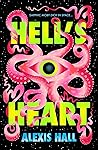
This book is summed up by the tag on the front cover: "Sapphic Moby-Dick In Space."

This is absolutely true, and will probably mean more to you if you've read Herman Melville's classic original. I haven't, but at the same time there's so much commentary on Moby-Dick floating around everywhere that I've managed to absorb a great deal about it, simply by osmosis. It was published in 1851 and written in the style of that era: a slow pace and flowery prose, and frequent side-jaunts into exposition and downright infodumps, especially about whales and whaling. And of course we have the famous opening line: "Call me Ishmael."

Hell's Heart starts with this: "Call me...call me whatever the fuck you like. Isha. Or Isobel. Io. Imogen. Iris. Ivy." This sets the stage for the first-person narrator: snarky, irreverent, extremely fucked-up, susceptible to manipulation, yearning for danger, both of space and hunting the Leviathans--the gigantic aliens in the atmosphere of Jupiter--and a writer very aware of the fact that she's telling what happened to the Pequod decades after the destruction of the ship and the deaths of the crew. She frequently breaks what would be called in television "the fourth wall," speaking directly to her reader in often sarcastic terms. Sometimes you think she's learning from all the things that have happened to her along the way, but at the end of the book when she leaves her lover Q on what remains of a depopulated and strip-mined Earth and returns to space, you realize she really hasn't. Which is aptly summed up in the novel's final line:

And only I am returned. Alone.

This book has Moby-Dick's characters, but the three main ones--Ishmael, Queeqeeg, and Captain Ahab--are gender-flipped, and known as Isha, Q, and A. Aside from that, the bones of the classic tale are there: pursuit and revenge, hatred and obsession, and the captain's all-consuming quest to hunt down and kill what is here called the Mobius Beast. The biggest difference is the setting. Instead of the oceans of Earth, we have the atmosphere of Jupiter, and these Leviathans are huge (sometimes hundreds of feet long) alien creatures evolved in that atmosphere, with Lovecraftian tentacles and hundreds of eyes, and Alien-like jaws within jaws. These Leviathans are hunted for their "sperm," their cerebrospinular fluid that, harvested and refined, powers human civilization. Humans have spread from the ruins of Earth to most of the solar system, but instead of relying on solar or fusion, they rely on a limited natural resource (although realistically, given Jupiter's immense size, there are probably trillions of Leviathans there). Hunting these creatures in the planet's deadly, turbulent atmosphere (the titular Hell's Heart, besides being a quotation from the original book, is, I believe, a reference to Jupiter's Great Red Spot) is every bit as dangerous as it sounds, and as foolish, when there could easily be alternate forms of energy.

(It only occurred to me after I finished the book that we could say the same things about fossil fuels, in our reality.)

This book sticks fairly closely to the plot and pacing of Moby-Dick and employs a lot of the same terminology. It is also--and how do I put this--a lot sexier than the original. Oh, to heck with beating around the bush: most of the characters here fuck, like, a lot. Isha is both involved with Q and is Captain A's fucktoy, with only contributes to her cultish worship of the captain, even as she realizes that A is likely leading them to their deaths. In the end, at the culmination of that three-day chase, the captain's death is almost anticlimactic: A stabs the Beast in one of its eyes and is riding the harpoon line out to confront it, and the Mobius Beast simply opens the first set of its multiple jaws and snatches the captain out of the sky, gulping her down like a crocodile snapping up a pesky insect. After that it rounds on the Pequod and crushes the ship and everything on it, making its stores of raw spermaceti explode, and only Isha and Q escape out of everyone, spinning away from the ruins of the ship in a lifepod.

Of course, the heart of the tale is the hunt, and the obsession, and the crew's being led along by a charismatic narcissist they cannot bring themselves to gainsay. (Sound familiar?) Along the way there are discussions of religion and the awful, predatory capitalism in this bleak, nasty future (there are no countries anymore, just predatory pharmaceutical- and corporate-states that own and profit from every facet of society). People are simply broken here, like Isha. She knows it, and the reader knows it.

I don't know if you could say I liked this book as much as I was drawn in by the author's audacity in retelling the classic novel the way she did. Isha's unique voice was the book's main draw, for me, and took me past what sometimes seemed like glacially slow pacing. This book is what it is, and you have to take it that way, warts and all. I think if you like it, you'll really like it. I'm not going quite that far, but I don't think I regret reading it, either.

View all my reviews

May 21, 2026

Review: The River Has Roots

The River Has Roots The River Has Roots by Amal El-Mohtar
My rating: 5 of 5 stars

This book surprised the heck out of me. I went into it basically cold, knowing nothing about it--and closed the back cover on a beautiful story, wonderfully told.

This is a fantasy that has the feel of a fairy tale centuries old, a maybe-true story that has passed into myth and legend, and still has so much to say. At its heart it's the tale of the love between sisters, and how that love will transcend time and even death. It also casts its magic in the structure of grammar and the language of music, with lush, supple prose. Just look at this paragraph:

Most music is the result of some intimacy with an instrument. One wraps one's mouth around a whistle and pours one's breath into it; one all but lays one's cheek against a violin; and skin to skin is holy drummer's kiss. But a harp is played most like a lover: you learn to lean its body against your breast, find those places of deepest, stiffest tension with your hands and finger them into quivering release. You rock together, forward and back; your left hand keeps a base rhythm while your right weaves a melody through it, and they flutter past each other as the music becomes more complex, swells, breaks, shakes the body of your instrument in joy and grief alike, in the wild, wonderful grammar of being alive.

There are songs in this book, in the mode of Loreena McKennitt's take on the old English ballad "The Bonny Swans"--murder ballads, they're called, and the protagonist uses one to reveal her murderer, the man who drowned her for her land and sent her to Faerie--here known as Arcadia. This is Esther Hawthorn, who loved a Fae--here named Rin, but who seems to be Mab, the Queen of Air and Darkness. Esther's sister is Ysabel, the younger of the two, who works with Esther to guard the two willow trees, the Professors, watching over the magical River Liss, the river that flows out of Arcadia. The River Liss brings magical "grammar" to the human world, and human witches "conjugate" it into many useful things.

Esther is being courted by one Samuel Pollard, and turns him down because she has fallen in love with Rin. In a jealous rage, Samuel drowns her in the river, but because of her ties to Rin (a betrothal ring) the River Liss flows backwards and delivers Esther's body into Arcadia. There she is reawakened into life, but because she died on the other side, she can only return to the human world in a different form. She asks Rin to make her into a harp, and when Rin brings her back to her parents' house where Pollard has shifted his attentions to Ysabel, Esther sings a murder ballad of identification and Pollard is exposed. Then she has to go back with Rin into Faerie, but before they leave Rin gives Ysabel a hint on how she can find a hidden entrance and sing her way back in--and years later, Ysabel does just that, bringing herself and her young child into the Fae-lands, and the sisters are reunited at last.

It's a simple enough tale, but it has a lovely timelessness. There is even an "I" narrator who is never identified, and in the end who the narrator might be (Ysabel's child, maybe?) doesn't matter. I was completely caught up in the story of Esther and Ysabel. This book is simply gorgeous, and you owe it to yourself to read it.

View all my reviews

May 19, 2026

Review: Platform Decay

Platform Decay Platform Decay by Martha Wells
My rating: 4 of 5 stars

The Murderbot Diaries, starting with All Systems Red, revitalized Martha Wells' career in 2017. It has since sold millions of copies according to what I've read and been adapted into a pretty good Apple TV series. This book is the latest in the series, and although I think Network Effect has so far been the best, this one is compelling in its own right.

Murderbot is the star attraction of this show, and while its voice is the same--cranky, irascible, anxious, sometimes neurotic--it is very gradually starting to unthaw and work through its emotions (as much as it hates having them, it has come to realize they have to be dealt with). It does this by way of a "mental health module" it has installed, and repeated "emotion checks" throughout the book. These brief asides are generally as anxious and sarcastic as Murderbot's usual persona, but occasionally they express real vulnerability and its growing attachment to its humans, especially Mensah.

The storyline involves Murderbot's extraction of Mensah's two other marital partners from a corporate holding facility set on a space ring torus. (Murderbot's world is a generally unpleasant one, featuring corporate entities that are nothing more than glorified slave holders.) Murderbot and its protege, Three, another SecUnit recently released from its own governor-module bondage, storm the station and work their way inside. To enable Mensah's partners to escape, Murderbot has to also rescue the relatives and children of the person who had been hiding Mensah's humans on board the station. Complications and unwanted emotions ensue as Murderbot and its unexpected entourage maneuver throughout the torus and its many different sections and environments.

I think this book could have benefited from being a bit longer. It is so fast-paced there is little chance to slow down and digest, either for the reader to digest the story or Murderbot to digest its complicated emotions. This book is also not quite as funny as some of the previous books, as Murderbot is so caught up in its mission it does not have the time for snarky observations as it usually does. Having said that, its relationship with Three is prickly and amusing and gives an extra dimension to Murderbot, as it has been roped into a pseudo-parent role it definitely does not want.

I don't know how long Wells will keep the series going, but I get the sense she's beginning to wind things up? Maybe only one more book? If that is the case, I hope she slows down and gives us a lengthy tome for Murderbot to go out on. Our favorite SecUnit deserves it.

View all my reviews

May 13, 2026

Review: Green & Deadly Things

Green & Deadly Things Green & Deadly Things by Jenn Lyons
My rating: 4 of 5 stars

Jenn Lyons has written the typical sprawling epic fantasy series (A Chorus of Dragons, consisting of five chunky brickbat volumes) but her two recent books, The Sky on Fire and this one, are self-contained stand-alones. To be sure, a five-volume series can be a good thing if it's written well enough and you can get into it, but at least where this author is concerned, I prefer books like these.

If The Sky on Fire offered a nicely unique twist on dragons, this one tackles the legacy of J.R.R. Tolkien's Ents. The title Green and Deadly Things refers to sapient plants and walking tree queens, all tied into the person of the protagonist, Novitiate Mathaiik Haven. Math is a junior member of the Idallik Knights, long after he should have manifested his own magical weapon and joined the Knights as a full-fledged member. The Knights are modern-day guardians against the legacy of the ancient "grim lords," undead wizards who centuries ago nearly destroyed the world.

The story begins with a prologue of a stupid, arrogant bureaucrat who inadvertently awakens the main antagonists, the three Tree Queens, who proceed to lay waste to a logging company's fortress. Math is sent out with a group of Knights to investigate, and stumbles upon a conspiracy that reaches a thousand years into the past and the highest levels of his country Rokasmaa's government. Along the way he accidentally awakens one of the so-called grim lords, the sorceress Kaiataris, and discovers that nearly everything he has been taught about the past and the grim lords' legacy isn't true. He also realizes that he is what Kaiataris--or Kai, as he comes to call her--calls a "wild mage," and he is not the bumbling hanger-on the Idallik Knights always considered him to be, not at all.

The real pleasure in this book is the worldbuilding and the well-thought-out magic system, and how the past reaches its flowery, leafy tendrils into the present. Along the way, Kai and Math overcome their mutual distrust and fall in love, in a nicely paced slow-burn romance (much the kind I prefer). At the climax, Math confronts the final surviving tree Queen, and realizes that as with so many other things about his world, she is not the monster everyone thought she was. In fact, she enables him to defeat Sanistral, the sorcerer who has been manipulating things behind the scenes for quite some time. Sanistral was preparing an invasion of Rokasmaa, until he is stopped by the Queen, Math and Kai. In the process, Math has to take on the mantle of the Queen and become one of the tree people, the Parnathi, and ends up very nearly a god himself. But one can see that due to his own self-effacing nature and his relationship with Kai, he will hopefully avoid the arrogance and hubris that brought the grim lord Sanistral down.

I hope the author keeps this tradition of standalone stories, as they are quite satisfying. I think I can handle chunky books if they're one-and-done. I handled this one, at any rate, and you probably will too, if you give it a try.

View all my reviews

May 12, 2026

Review: Wolf Worm

Wolf Worm Wolf Worm by T. Kingfisher
My rating: 4 of 5 stars

I've read plenty of T. Kingfisher's books, but this one is one of the most disturbing stories she's ever written. (Seriously, if you have an insect and/or a worm phobia, do not tackle this book. There are several points in the narrative where you will throw it against the wall and run away screaming.) Nevertheless, once everything was set up and the dominoes started to fall, I couldn't put it down. I stayed up until well after midnight to finish it.

This is a Southern gothic, which means that the atmosphere and setting figure prominently. We are in North Carolina at the turn of the century, where artist and illustrator Sonia Wilson has arrived to chart and sketch the extensive insect collection of noted naturalist Dr. Matthias Halder. Dr Halder's life's work has a focus on parasitic insects (with a special emphasis on botflies and screwworms) and he needs someone to paint the many bugs in his collection. Sonia, left adrift and nearly penniless after the death of her father (because society is so kind to unmarried women over 30 in 1899), takes the job and naturally has no idea of what she's getting herself into.

Due to the nature of the genre, the plot elements take a while to set up. This may make the opening chapters feel like slow going, but don't skimp. From the huge and strangely empty main house, to the whispers of "blood thieves" in the surrounding woods, to the supremely talented illustrator who preceded Sonia and whose presence still lingers in her rooms, to the odd locked shed on the back of the property that Sonia spots Dr. Halder visiting at night, carrying a live chicken...everything has its place and purpose. When it all comes together and the story shifts into high gear, you are left gasping. Then there is the twist that takes the story into not supernatural, but more scientific horror, and how the author puts a unique spin on what could have easily been a cliche.

Say that you were a scientist who studied parasites. There is only so much that you can observe from dead specimens. You need to watch their process through living flesh. But host animals are small and often hard to keep alive, particularly if you wish them to be infested over and over. How often can you pull a screwworm out of a rabbit before it dies of massive infection?

Say that you learned about another kind of human. One who heals at an astonishing rate. One that feeds on blood and viscera and who can endure astonishing hardships.

Say that your wife was about to run away with someone, and you caught them. You shot him and crammed his body into the shed you had once kept animals in, expecting him to die, but instead he healed, and you realized that he was one of these others.

Say that you realized this was the solution to your problem. A subject that would not die, no matter how many holes you put in him, digging screwworms out of his flesh. No matter how many botflies lived beneath his skin. An endless source of material for your studies...assuming that you were willing to commit atrocities that no one should inflict on another living being.

Say that you hated him enough to do it anyway.


If this excerpt squicks you out, be warned--because Kingfisher goes all the way with her premise. There are flies and worms galore here, and we are shown in icky, loving detail what they can do. It gives the protagonist PTSD, and maybe the reader as well. Nevertheless, this is one of the author's best books. Sonia is one of Kingfisher's patented older, sensible heroines, who tackles the horrors she sees from a pragmatic, scientific point of view (after the initial skin-crawling shock). There isn't a romance in this one (at least not for Sonia) because it isn't necessary. At the end, she is making her own way in the world, working as an artist/illustrator, with some mental scars and more than a few nightmares. The ending is unsettling, and deliberately so, but it couldn't have ended any other way. I guess this is a qualified recommendation, because your enjoyment of the book will definitely depend on your mental and intestinal fortitude--but if you can handle it, it's really good.


View all my reviews

April 30, 2026

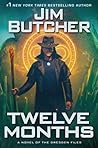
Review: Twelve Months

Twelve Months Twelve Months by Jim Butcher
My rating: 4 of 5 stars

This is the eighteenth book in the Dresden Files, one of the few urban fantasy stalwarts from the oughts still standing. (It must be selling in sufficient numbers, since the books have now graduated to hardcover releases.) Harry Dresden, our protagonist, has been through several different kinds of hell, and this book is a much-needed change of pace: slower, more thoughtful and reflective. Which it would have to be, after the fire and frenzy of the previous book. I really enjoyed this, and think it's one of the better offerings in the series.

As the title reflects, it follows twelve months in Harry's life: twelve months of pain and healing. Twelve months of PTSD and recovery after the previous volume's Battle of Chicago. Most important, this book chronicles twelve months of grief over the death of a pivotal character. You may not agree with what the author did in Battle Ground, and you may think it was a quite unnecessary "fridging." That would be valid. Nevertheless, this book takes Harry in new directions and sets him up with a new found family. It gives him more responsibility and explores his relationships with his daughter, his brother, and the White Court vampire queen, Lara Raith, he is being forced to marry (presumably in the next book). Harry finds a way to make the best of that sticky situation, and in the end, he and Lara end up as partners and wary allies.

This book's dedication has a hint that the author may have based this on his own "year of hell." This is just speculation on my part, but the book definitely gives off that vibe. It takes time for Harry to recover, and for the most part, he gets that time. Unlike other volumes in the series, there is not one overarching Big Bad (although that seems to be coming). Rather, it's a series of slowly escalating incidents--aftereffects of the Battle of Chicago--that Harry has to deal with. He struggles to put aside his own pain and begin helping people again, and we see the depths of that struggle. This story is also something of a character study of Harry Dresden, and it's very effective.

We do get a magical fight scene at the end of the book, when Harry is able to take up his staff again, and it's a banger. It is mercifully short, compared to the last book (which was more or less one chaotic extended battle), and I think it packs a helluva punch. Just as an example:

I slammed my open right hand against the wall of Merlin's fortress as the three corpses whirled toward me, reorienting after the sudden absence of resistance. There was an instant of frozen silence.

"You should have come on a school night," I said harshly.

And then, at my will, the enchanted, obdurate stone of the second floor, that entire portion of the second floor, tons and tons and tons of rune-etched rock, slammed down more swiftly than a blinking eyelid, like a vast and ancient sledgehammer coming down on three doomed cockroaches.

It was messy as hell.

Black ichor, thick and sticky as tar, sprayed everywhere in a fine mist.

And that was that.


Well, that's one way to get rid of your enemies.

Harry is in a better place at the end of this book, and ready to take up the challenges ahead. I don't know how many more books the author has planned for the series; I heard it may end with book #22 or #23? In any event, I hope he keeps up with the plot and character threads he has laid down here. This book should provide a good launching pad for the series' endgame.


View all my reviews

April 29, 2026

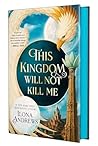
Review: This Kingdom Will Not Kill Me

This Kingdom Will Not Kill Me This Kingdom Will Not Kill Me by Ilona Andrews
My rating: 5 of 5 stars

Ilona Andrews (a husband-and-wife writing team) is better known for writing urban fantasy, particularly the Kate Daniels post-magical-apocalypse series, all of which I own. This book is a sort of urban fantasy, but it takes place in the second-world country of Rellas and its capital city of Kair Toren. This world is based on an infamously unfinished epic fantasy series that the protagonist Maggie has read over and over again. This knowledge proves to be her lifeline when she goes to bed one night in her bog-standard US apartment--and wakes up cold and naked in the streets of Kair Toren.

(This opening is an interesting stylistic choice, by the way. The book's first chapter starts with Maggie already in Kair Toren, stealing a blanket to wrap around herself and searching for food. We get no beginning scene of her actually waking up in the country of her book. Which is rather an extreme example of in medias res, but it certainly grabs the reader's attention.)

Maggie isn't a superhero, or a Renaissance veteran with a sword, or a kickass karate queen. She's an ordinary young woman who is capable of being hurt by this new world. Or even killed....although as we soon discover, if she dies she comes back to life (hence the series title, Maggie the Undying) and even regrows chopped-off fingers (in a rather gruesome torture scene). Her superpower is her intimate knowledge of the characters and storylines in the two published books of the series, and how she can use that to predict Kair Toren's future--and ultimately, try to change it. Because Kair Toren and Rellas will be subject to political betrayal and sorcerous manipulation that will eventually culminate in an apocalyptic war, something Maggie is determined to prevent.

Of course, she has no idea how she got there, and when, or if, she will ever return to Earth. But as time goes on and she survives, and gets to know the people of Kair Toren, she decides that doesn't matter. The people who previously only existed on the page are there before her in messy, vivid life, and she realizes she must try to save them if possible.

So she becomes Lady Maggie with her own house, and begins working behind the scenes to prevent the war. Her book knowledge is vital to this effort, although as she begins influencing and changing events, that will eventually lead to diminishing returns. She also discovers characters and incidents that were not mentioned in the books. And the fact that the third and final book remains unpublished puts a severe constraint on her knowledge, as she has no idea how some things will ultimately turn out. This, however, does not stop her.

As you might have gathered from all this, the worldbuilding in this book is rich, layered, and fascinating. It's right up my alley. The city of Kair Toren is as much a rounded character as Maggie and the other humans. Politics and backstabbing court intrigue figure prominently. Maggie's delicate dance to maneuver through all of this, while not revealing her deepest secret--that everyone and everything here is a figment of someone's imagination, impossibly come to life--makes for absorbing reading. There are manipulations, betrayals, desperate last stands, an unwilling slow-burn attraction, and some magic-powered animals that are decidedly different than the usual run of dragons et cetera. This is the first of a trilogy, as the title page (and the cliffhanger ending) makes clear.

I don't know if this is meant to be a rebuttal to some real-world unfinished fantasy series (George R.R. Martin and Patrick Rothfuss, looking at you), but it is definitely an exploration of why it may not be such a great thing to be tossed into the world of your favorite book. It deals with some important questions along the way, such as: if you know a tragedy is coming, is it your responsibility to try and stop it? Is it ethical for you to manipulate the characters in your story-come-to-life, even to save them? In one way, Maggie is setting herself up as a little-g God. Does she have any right to do that?

The authors have most assuredly leveled up with this one. I can't wait for the next book.

View all my reviews

April 20, 2026

Review: Murder by Memory

Murder by Memory Murder by Memory by Olivia Waite
My rating: 2 of 5 stars

This "cosy" SF mystery is set aboard a generation ship, the Fairweather. The protagonist, ship's detective Dorothy Gentleman, is abruptly awakened in a body not her own, and has to solve a murder. Unfortunately, the body her mind has been uploaded into is one Gloria Vowell, who proves to be the prime suspect.

This book could have been better, but the setting, worldbuilding and characterization is, as the saying goes, a "mile wide and an inch deep." Thin and shallow, in other words. The very real and potentially life-threatening problems of life on board a generation ship are not even touched on, and the ramifications of a technology where people's brains are mapped into "memory-books" for uploading when their current bodies wear out, thus making them functionally immortal, are similarly ignored. The Fairweather, or Ferry, as she is known, has a shipboard culture that appears to be both socialist and capitalist at the same time? which makes for some uneasy bedfellows, to say the least. (In fact, the latter is the villain's motivation for the murders, as she works a centuries-long financial grift whereby she loans people money, murders them, and gains untraceable interest on the loans during the time period until they are decanted into new bodies. It's not like they're gone forever, after all! They come back!)

Yeah, that....doesn't make a whole lot of sense. She may gain a fortune, but what's she going to do with it when they reach their destined colony planet in seven or so centuries? It's not like those extra dollars are going to do her much good, light-years away from Earth while the ship and its inhabitants fight to terraform their new world.

This may be the result of the story's 100-page novella length: the pacing is tight, and some of these things needed more time and space to breathe. Still, at the end I wasn't very fond of either Dorothy Gentleman or her ship.

There are better generation ship stories around, and much better mysteries. (See: either one of Robert Jackson Bennett's Shadow of the Leviathan fantasy-mysteries, The Tainted Cup and A Drop of Corruption. ) This one, I think, can be safely passed over.

View all my reviews

April 11, 2026

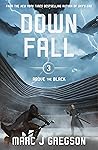
Review: Downfall

Downfall Downfall by Marc J. Gregson
My rating: 4 of 5 stars

This is the third book in the young adult Above the Black trilogy, and brings everything to a pretty satisfying end. As I predicted in my review of the second book, Among Serpents, the new and nastier villain is the protagonist Conrad's uncle Ulrich, the self-proclaimed "King of the Skylands" (even though he gained his position through treachery and mass murder). Ulrich schemes against and manipulates everyone around him, and is not above sending his nephew to what will likely be his death in the monster-ridden Below.

We learn quite a bit more about this secondary world in this concluding volume, especially about the Below and its inhabitants the Lantians. In fact, that is my main issue with this book--there is so much necessary plot and background to be revealed that the first third of the book feels overstuffed. There is seemingly endless running and hiding and fighting, and the characters (and reader) scarcely get a chance to breathe. It's not till the middle section of the book that the pacing thankfully slows down, as Conrad lets everyone believe he is dead, takes on a new identity, and begins the preparations to challenge his uncle. He has to become a far better duellist than he's ever been, and he also has to prepare himself to take on the mantle of leadership--because if he defeats his uncle, he will be the new King of the Skylands.

This volume explores Conrad's dilemma, and how he will use what has been given to him by both his mother and father, the seemingly opposing traits of compassion and ruthlessness respectively, and his melding the two. At the story's climax, he does defeat his uncle, but the author acknowledges that the work won't end there. Conrad has to basically rebuild the world, undo the damage the Skylands has done to the Below, and balance many opposing factions. The situation is fragile and precarious, but the book ends with a reason to believe that Conrad will pull it off.

Taken together, these books boast well-thought-out worldbuilding and a satisfying story. They're nothing like most YA fantasies out there, to be sure. I'm happy to have read all three of them, and I think others will be too.

View all my reviews

March 26, 2026

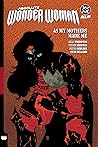
Review: Absolute Wonder Woman, Vol. 2: As My Mothers Made Me

Absolute Wonder Woman, Vol. 2: As My Mothers Made Me Absolute Wonder Woman, Vol. 2: As My Mothers Made Me by Kelly Thompson
My rating: 5 of 5 stars

Absolute Wonder Woman Vol. 1: The Last Amazon was one of the best graphic novels I read last year, and this volume continues that excellence. In this volume, Diana of Themiscyra, stolen from her mother and sisters as a baby, raised by the sorceress Circe in Hell, called Diana, witch of the Wild Isle, daughter of Circe and (she thinks) last of the Amazons, begins her search for her sisters. This leads her to a labyrinth where she meets a bull-headed monster, Ferdinand, pursued by "fish-men," and the sorceress Clea, who rules over the labyrinth with an iron fist. Clea throws Diana down a well, where Diana finds a secret society of survivors trying to tunnel their way out--and Io, one of her sisters. Diana spins up a magic ball to break through the labyrinth and free these people, and goes back to rescue Ferdinand.

At this story's climax, we get another example of how this series' writer, Kelly Thompson, understands the character of Wonder Woman so well. Instead of killing Clea, Diana breaks open one of the tunnels and floods the labyrinth with the sea, freeing Clea and her minions, taking a chance that even though Clea was a monster inside, she will not be one now that she is free. Along this line, as another exploration of the love and compassion that is Diana's heart, we have a flashback to one of her earlier tests as a child in Hell, where she met the goddess Artemis as a snapping bloody-fanged panther and had to stand up for one of the island animals who is her friends.

What really stands out in this volume, for me, is the art. It's not the typical nine or six square panels, at all. Each two-page spread has its own design, from circles to angles to triangles to loops. It's fascinating how the artist, Hayden Sherman, juggles all these different page spreads while enabling the reader to still follow the story. It's worth taking time to go back and look at each page, savoring how the pieces fit together to draw the eye and move the story forward.

I preordered this volume from my local bookstore as soon as I heard it was being released, and I'm glad I did. The back blurb says Absolute Wonder Woman won an Eisner Award for Best New Series, and it is well deserved. This series is ongoing, and I will continue to buy the collected volumes as long as they are coming out.

View all my reviews

March 11, 2026

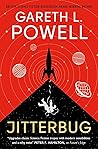
Review: Jitterbug

Jitterbug Jitterbug by Gareth L. Powell
My rating: 4 of 5 stars

I have several of Gareth L. Powell's books. He has written series in the past, but his last couple of books have been standalones, which is a good thing in my mind. (Just looking at Brandon Sanderson's fifty-pound bricks exhausts me.) That continues to be the case with this book, a one-and-done space opera with a few timey-wimey twists at the end.

This story also falls in the category of....I don't know if you could really call it Big Dumb Objects, because the objects that make up what Powell calls the Swirl are actually pretty interesting. They're the remnants of the outer planets (Pluto, the Oort Cloud, Neptune, Saturn and Jupiter) which were taken apart by--something--a hundred years ago and re-formed into several segments facing and orbiting the Sun. These segments are so unimaginably huge (hundreds of millions of miles long and wide) that they hold their own atmospheres and are inhabitable. In fact, humanity has begun doing just that: leaving Earth and Luna and settling on these segments, building towns and planting crops and making lives for themselves. (Since Mars is also unraveling and humans don't have the slightest idea how this is done or how to stop it, the unspoken horrific expectation is that eventually Earth will be taken apart as well and the Swirl will be the only place humans can live.) The Swirl has become the Wild West of the outer solar system, a place where people can disappear into a segment that can hold a million Earths and never be found again.

Our main POV character is Copernicus Brown, the captain of the titular sentient starship Jitterbug and a bounty hunter who tracks down the outlaws who attempt to disappear into the Swirl. Following a successful bounty, Copernicus and his crew are on their way back to Luna when they run across a ship under attack by pirates. They divert to render assistance, only to discover when they get there that both the ship who called for help and the pirate ship have been taken apart by an unseen third vessel that cut them both open like tin cans and disappeared. The Jitterbug comes under attack by one of the last survivors of the pirates and one of her crew members is killed. Upon scanning the mangled ships another survivor is found hiding in a water tank. Copernicus goes to set this person free, and finds a woman calling herself Amber Roth who is claiming to be a captive of the pirates and who attempted to escape. But Amber Roth has secrets of her own, as evidenced when the Jitterbug scans her and sees an encrypted data crystal in her stomach, which she apparently swallowed when the pirates attacked.

This one fateful decision sets the plot in motion, as Copernicus and the Jitterbug's crew soon realize they have stumbled upon a system-wide conspiracy involving the higher-ups at the Solar Assembly, the organization tasked with managing the Swirl and space travel. This chip holds evidence that something is coming, that a huge object a thousand miles wide is on its way insystem. The Jitterbug and her crew are tracked down by the Deputy Speaker of the Solar Assembly, Danielle Lanzo, and tasked with meeting this object, which the Solar Assembly thinks may be an alien ship, for first contact. But there are other players who wish to get there first, and the plot becomes a race between the Jitterbug and these other players, some of whom are willing to kill to protect their place in line.

The final third of the book details Copernicus Brown and his ship meeting the alien object, and the reveal involves the timey-wimey shenanigans I spoke of earlier. There are also other aliens inbound to Earth, a locust-like species that strips planets of every resource, murders the inhabitants, and leaves the solar system with nothing but burned ruins behind. Copernicus and the Jitterbug (or a couple different alternate versions of them) are trying to rescue the human race.

As usual with this author, the sentient starship Jitterbug is a major player in her own right. Powell likes several alternating first-person viewpoints in his stories, and in this one there are clear differences between the characters and their voices (especially Danielle Lanzo's). Some of the ideas in this book could have actually used more room to explore, but this story, also typical of Powell, is a lean and mean 300 pages.

I think my favorite work of Powell's is still his Embers of War trilogy, but this one is right up there. If you're a fan of space opera, you won't go wrong with this.

View all my reviews

March 5, 2026

Review: Slow Gods

Slow Gods Slow Gods by Claire North
My rating: 5 of 5 stars

I'd never read any of this author's work before, but after seeing a couple of glowing reviews I decided to take a chance on it. I'm glad I did, as it's one of the best books I've read so far this year.

This is a space opera, but it's unlike any space opera I've ever read before. Most space operas have casts of thousands and galactic- or universe-wide stakes. This book has plenty of characters, but it's told entirely through the eyes of one Mawukana na-Vdnaze, a protagonist who starts out as human, then becomes something utterly inhuman, and is slowly working his way back to something close to human as the story ends. This is all summed up in a terrific opening line: "My name is Mawukana na-Vdnaze, and I am a very poor copy of myself."

It's also the story of the Shine, a fascistic interplanetary regime who commits atrocities against its own people and who is brought down in the end. It is brought down by a huge, ancient artificial intelligence called the Slow, who traverses the cosmos and tends to descend on settled planets to warn them of momentous upcoming events. In the story, the Slow may as well be a god, given how it seems to predict the future and manipulates events...and possibly manipulated Mawukana's existence and life. That is left ambiguous in the story, but the implication is definitely there.

It's also the story of the author's version of FTL travel, known as arcspace: an alternate dimension that ships use to jump across the lightyears, which can only be accessed by a ship operated by an organic Pilot. In the Shine, people are forced into this position and used until they die and/or go insane. Mawukana was a Shine Pilot, and on one arcspace jump he died. Then something in those fathomless depths brought him back to life, recreating him out of the stuff of arcspace itself, leaving him immortal and impossible to kill, and utterly inhuman. At the beginning of the book, he is pretty much an inhuman monster, and over the course of the story he becomes....less so. He learns to feel, to regret, to help others--and even to love, a love so profound it will guide him through the rest of his days.

All these elements are brought together by the chunk of hard SF that sets off the plot: a binary star system collapses on itself, and the resulting shock waves of radiation will obliterate all life within an 83 light-year radius. This includes several Shine worlds, and the Shine, as befits a corporate fascist, refuses to acknowledge this is happening (at least for its employees and its indentured workers/slaves--its Managers and Executors get free rides out, of course). The Slow is the one who warns the people in these various systems of what is coming, and it is the Slow who orchestrates the downfall of the Shine, sacrificing (Mawukana figures) nearly two billion people to save many billions more.

This story is beautifully told, with lovely prose and many different, well-thought-out and fascinating cultures. Time-wise, it covers over two hundred years, the entirety of Mawukana's life and then some. It's not flashy or bursting with glorious battles, but it grows on you from that opening line. This is a terrific story that gets my highest recommendation.

View all my reviews

February 22, 2026

Review: Oathbound

Oathbound Oathbound by Tracy Deonn
My rating: 3 of 5 stars

This book, the third in the young-adult Legendborn Cycle, succumbs to what could be called "creeping-pageism." That is, each successive book veers more and more into Brandon Sanderson-style brickbat territory, since this book is a whopping 642 pages.

Unfortunately, I don't think the ever-expanding length does the story any favors. The pacing is my major issue with this book, as so many of the scenes and conversations meander on and on for pages and don't need to. If you're invested in the characters, as I suppose I still am, you can give the book a bit of a side-eye and overlook this, but I can also envison a newbie to this series putting the book down in frustration. (Not to mention that you absolutely should not start the series with this book; it sorely needs a "the story so far" prologue. I don't know why series authors are so resistant to this.) It's not till the last quarter of the book that the story really gets going, and it took me several days to work my way through the previous three-quarters.

Which is too bad, as both the main protagonists Bree Matthews and Nick Davis go through some nice character development, and another main character, Selwyn Kane, becomes at the very least an anti-hero and possibly an all-out villain, due to a...rather frustrating plot twist in the book's final pages. The secret Arthurian society that rejected Bree, the reborn Arthur Pendragon, as their ruler, still has their racist and misogynist head up their ass, as they will not accept a young Black woman as their leader. This all seems to be setting up an explosive fourth book, but I really wish this one hadn't dragged so much to get there.

All of which is a roundabout way of saying that I didn't like this book nearly as much as the first two. I hope the series isn't getting into diminishing-returns territory, as the first book in particular was very affecting. We shall see.


View all my reviews

February 3, 2026

Review: Snake-Eater

Snake-Eater Snake-Eater by T. Kingfisher
My rating: 4 of 5 stars

T. Kingfisher regularly writes whimsical fantasies (when she's not venturing into gut-churning horror) with mature protagonists and dogs that don't die. This is another one of those, as close to a "cozy" fantasy as we're ever likely to see from her. (It's also got a terrific cover, depicting a roadrunner, a nasty miniature dinosaur that does in fact regularly hunt and kill rattlesnakes.)

This time around, our protagonist is Selena, a woman who comes across as somewhere on the autism spectrum or at least neurodivergent, who flees an emotionally abusive relationship to visit her aunt Amelia, who lives in Quartz Creek, a tiny, isolated Southwestern town. She uses nearly the last of her money to get there, only to find that her aunt died the year before. She does not know what to do, but a couple of the people she meets in town urge her to stay at least the night in her aunt's empty house (including her closest neighbor, Grandma Billy, who is an unmitigated delight). Selena stays the one night, which gradually morphs into more and more nights as she meets and makes friends with more people in Quartz Creek. (She does not want to return to her former partner Walter, who we don't meet until nearly the end of the book, where he turns out to be a patronizing, gaslighting SOB who Selena is well rid of.) Selena had contemplated moving on after she found out about her aunt's death, but as the days slowly slide by and she settles in despite herself, she begins to imagine making a life in Quartz Creek.

Of course, it isn't that easy. She gradually discovers there are spirits in the desert, including a little "squash god" caring for the garden she plants in the back yard. There is also a rather more malevolent spirit, the titular Snake-Eater, a roadrunner god who we discover manifested in physical form and had a relationship with her aunt. Snake-Eater thinks Selena has come to take her aunt's place, and the storyline turns into her struggle to be free of him.

Throughout, the author exhibits a sense of droll humor about all this that had me laughing out loud several times. For instance:

"He's a god," said Grandma reasonably. "Or nearly one, anyway. I've never been clear on the difference. Maybe a spirit instead, though I call him a god to be polite."

"You're saying...there's a god...in my garden." Selena hoped the words did not sound as mad out loud as in her head.

"Nothing to worry about. It's not like he's gonna be peeping at you in the shower. And if he likes you, you'll get a better crop than you might otherwise."


As the story progresses, Snake-Eater becomes more obsessed with Selena, leading to a confrontation in another world with the roadrunner god, Selena, Grandma Billy, and Father Aguirre (another delightful character, who turns out to be a were-javelina). Selena ends up shooting Snake-Eater and weakening him to the point where he won't be a bother to her or anyone else during her lifetime. She returns to Quartz Creek, looks at the home and friends she has made, and decides to stay.

There isn't any romance in this one (and may I say that I really like the author's understated, slow burn, mature romances) because it isn't necessary. Selena's entire character arc is learning to trust herself and the friends she makes in Quartz Creek, and stepping out from under Walter's--and ultimately Snake-Eater's--shadow. These are relatively small stakes, but they're no less important to the characters and the story. This is a delightful little book, highly recommended.


View all my reviews

January 29, 2026

Review: Hole in the Sky

Hole in the Sky Hole in the Sky by Daniel H. Wilson
My rating: 2 of 5 stars

I had high hopes for this book, since I own the author's Robopocalypse and Robogenesis. However, while it had a fairly solid setup, the ending fell flat for me.

This may be because the book is primarily a thriller, and written in a very cinematic way, as if it's a not very subtle pitch to be a blockbuster movie. There are four main characters: 1) the Man Downstairs, who observes and babysits a quantum computer deep underground who has tapped into the forward-background flow of time in the universe and makes predictions that always come true. Lately, the Pattern, as it's called, has been spouting gibberish that gradually becomes not-gibberish, evolving into the readable thoughts of....something. Something the Pattern has tapped into that terrifies the Man Downstairs; 2) Gavin Clark, an agent for the Department of Defense who investigates what used to be called Unidentified Flying Objects, and who is dispatched by the Man Downstairs with a Pattern-derived warning of "first contact imminent"; 3) Mikayla Johnson, a project manager with the Voyager team at Nasa Johnson Space Center who stumbles across anomalous data in the Voyager readouts, data that points to one thng: a large object headed our way; and 4) Jim Hardgray, a Cherokee man trying to reconcile with his estranged daughter Tawny, who gets caught up in the whirlwind of planet-altering events when the unidentified object detected by Mikayla Johnson reaches Earth and touches down at the Spiro Mound, an ancient buried Native city in Oklahoma.

All well and good, so far. This is a story of first contact, and all the worldwide upheaval that would entail. The descriptions of how it is discovered, and how the nations of the world prepare for it (the United States, per usual, immediately starts gearing up for war) is what makes this book more of a thriller than a SF story, at least at first. However, it's when the object reaches Earth and lands literally atop the Spiro Mounds is when the disappointment begins setting in, at least for me. Because it's at that point that the story takes a turn into mysticism and extradimenionsional Lovecraftian entities, and that simply didn't set well with me.

Look, I understand why the story took the turn it did. The author is an enrolled member of the Cherokee nation, and the swerve the story takes is drawn directly from the history, myths and legends of the Cherokee people. I don't want to sound like I'm putting any of that down. But as the characters descend into the hidden underground city of the Spiro Mounds, we discover that all the tunnels and chambers here, once mapped and revealed, show an ancient extradimensional reality-bending...god-brain asleep under the Earth's surface? A god-brain linked to a ship apparently made out of nanotechnology, that the Voyager probes reaching beyond our solar system woke up and compelled to return home? And said god-brain can be manipulated by the thoughts and desires of Jim Hardgray, in much the same way his ancestors evidently sang it to sleep fifteen thousand years ago, to the point where he can not only use the god-brain's power to recreate the bomb meant to destroy it, but also to resurrect his deceased son, dead for two years?

I mean, especially that last, that's not going to come back to bite humanity in the ass. No sirree.

Well, due to Jim Hardgray's knowledge of the ancient Cherokee language and stories, the god-brain is defeated...kinda? At least until Jim's son realizes what he really is, which I guess could be the storyline for a sequel if the author ever wished to write it. And the chapters of all those extradimensional reality-twisting alien horrors coming to life are well-written and dripping with atmosphere. But as far as I am concerned, the climax of the book does not live up to all that came before, which is a shame. (For a really excellent Native-authored fantasy combining horror with searing commentary on this country's Native American genocide, try Stephen Graham Jones' The Buffalo Hunter Hunter. You won't regret it.)

View all my reviews