Showing posts with label streaming tv. Show all posts

December 31, 2022

Streamin' Meemies: Severance, Season 1


I know I'm quite late in singing the praises of this surreal, bizarre, gorgeous little show. I watched the first episode a while back and didn't get it at all, so much so that I didn't continue. But I kept seeing people saying how good it is, and I finally decided to go back to it. 

I'm glad I did. This show, and in particular its gripping finale, "The We We Are," is one of the best things I've watched this year. 

SPOILERS FOLLOW


This show takes off from its "what-if" premise: what if your brain could be "severed," and a separate personality created specifically for your office job? This second person would spend your 40 hours a week at work, and cease to exist, or rather be switched off, as you got in the elevator each evening to leave. You as the original personality, the "outie," would not have to deal with the stupidity, boredom, and sucking soul-crushing of your mysterious job, and could live your life without that stress. 

On the other hand, the "innie," the person who only exists for those 8 hours a day, sees nothing but the same huge white room with its green carpet and four workstations clustered in the middle, with old-fashioned desktops that most certainly don't connect to the internet, day after day after day. There are no windows, so the innie never sees the sun and never gets to step outside. When they go anywhere inside the complex, they walk down what seems like miles of white mazelike hallways with no end, occasionally stumbling across surreal things like a guy handfeeding a bunch of baby goats. The innie stares at their monitor for hours, fetching strings of "happy" or "scary" numbers from a continually changing numerical display and depositing them in buckets along the bottom, over and over again. They have no idea what those numbers are, why some of them have to be plucked out and put elsewhere, and what "macrodata refinement" actually is. They don't know what Lumon Corporation is or does. They never see anyone but the same four co-workers--Helly, Dylan, Irving and Mark--day in and day out, until a few episodes in when they go to visit another department. They don't know who their "outies" are, or anything about their lives: are they married? do they have families? Hell, the innies don't even get to sleep (napping during worktime is one of many things that are forbidden, as is fraternizing with other co-workers or reading anything but the approved employee handbook). Their outies and bodies do, but these artificially created persons do not. 

If you're thinking this is a recipe for psychosis and disaster, you are absolutely right. This entire first season is an exploration of both the innies and outies, and each one's attempts to find out about the other. It's a slow and deliberate peeling back of the onion, and one must have patience with the first few episodes. But I can tell you that all of the reveals of the last three are sprinkled in perfect places (for instance, the black oily ooze that Irving sees dripping from the ceiling? turns out to be the thick black paint his outie uses to paint endless canvases of long dark hallways--evidently demonstrating some bleedthrough of his innie's experience--and painted to, of all things, Motorhead's "Ace of Spades"). Mark Scout, the Macrodata team leader, is haunted by the ghost of his dead wife Gemma; his grief over her death two years previously is the reason he agreed to the severance procedure (although that really doesn't make sense, as the separate work personality wouldn't remove his outie's problems). The new hire, Helly, has a great deal of trouble adjusting to her innie's reality, and in fact Helly changes her mind after the severance chip is implanted in her brain and repeatedly petitions her outie to resign--never mind that this would presumably lead to the innie's personality being wiped and her death. But Helly is desperate enough that she tries to commit suicide at the office more than once, once by hanging herself in the elevator. She does this after she watches a video sent to her by her outie, which includes some of the most chilling lines of dialogue from the entire show:

"I am a person; you are not. I make the decisions; you do not. And if you ever do anything to my fingers, know that I will keep you alive long enough to horribly regret that."

In the final episode, we find out exactly who Helly is and why her outie underwent the procedure. The final two episodes ramp up the horror of the premise and tease just how sinister Lumon is as a corporation--not that I expected anything different, but what they're hinted as setting up to do to the entire world is a whole new level of WTFuckery. 

The finale is an unbelievably tense, edge-of-your-seat ride, as Dylan sneaks into the security office and enacts what is called the "overtime contingency," essentially standing in one place with both arms outstretched for the episode's runtime of 40 minutes, holding two switches that will enable Mark, Helly and Irving to wake up in their counterparts' bodies in the outside world. We follow each character as they see who their outies are and struggle to convey what is being done to them. It's expertly paced and edited and one of the most suspenseful episodes of TV I've ever seen. And the final few minutes, capped by Mark's single anguished line of dialogue: "She's alive!" followed by a fade to black and the closing credits, left me with my jaw hanging open.     

I'm still thinking about it, days later. There's been a lot of good stuff on streaming this year, but this show has vaulted right to the top. It would be worth paying for a month of Apple TV just to watch this (along with For All Mankind). If this show doesn't get multiple Emmy nominations, there ain't no justice. 


November 24, 2022

Streamin' Meemies: Star Wars: Andor, Season 1


For the most part, I have enjoyed Disney's Star Wars series. Of course, the reigning cute couple is still Din Djarin and baby Grogu, but Boba Fett and Fennec Shand made an interesting quasi-mob-boss and sidekick, even if she was sorely underused. Ewan MacGregor returning as Obi-Wan Kenobi and an older Hayden Christensen as Anakin Skywalker/Darth Vader was a nice second look at those characters' dynamic, although the show was stolen out from under them by Vivien Lyra Blair as the young Princess Leia. Quality-wise, I would have said The Mandalorian would continue to reign supreme, especially with the show's upcoming third season set to explore Mandalore and Din Djarin's dilemma of having a Darksaber and a rulership he does not want. 

However, that was before I watched this show, which proceeded to blow all of them out of the water. 

There is nothing "kidsy" about this show. It is family-friendly in the sense that there is no nudity or graphic sex scenes (though the characters are shown to be having adult sexual relationships) but the themes are thoroughly adult. The characters grapple with the Empire's growing fascism, and the slow creeping clampdown on their rights and freedoms, until a character's speech in the finale strikes the spark of rebellion. (It's a testament to the strength of the writing that the moments remembered are Luthen Rael's, Maarva Andor's and Kino Loy's speeches, rather than the action scenes, although Luthen has a pretty good action sequence getting away from an Imperial cruiser.) The season finale, "Rix Road," ties up almost all of this season's character arcs and subplots and sets the stage for the next season, when Cassian Andor will be going all in for the Rebellion. 

Since this is a prequel to Rogue One, we already know what his fate will be. Still, there is a lot to be said on the journey there. I particularly loved how new and/or side characters are given their due, even if they only appear for a few episodes. Andy Serkis's Kino Loy, only seen in the "prison break" mini-arc of episodes 8, 9 and 10, is a fully rounded character who meets an ironic and tragic fate, and you feel for him just as much if he was the show's titular hero. (The final episode of the prison arc, "One Way Out," is tied in my mind with "Rix Road" as the two best episodes of the show.) Season 2 is supposed to take some time jumps to bring the characters up to the beginning of Rogue One, although from what I've read the plan is to follow the structure of this season by breaking it up into three or four mini-arcs.

However they do it, this season was some excellent, excellent television. Many of the comments I've seen on IMdb and elsewhere express surprise at Disney's being able to produce such a mature Star Wars show as this, and they're not wrong. Of course, there is a place for a wisecracking Han Solo as well, but that character isn't found here (or at least not yet). But when you have such great writing as this...

Supervisor Lonni Jung: And what do you sacrifice?

Luthen Rael: Calm. Kindness. Kinship. Love. I've given up all chance at inner peace. I've made my mind a sunless space. I share my dreams with ghosts. I wake up every day to an equation I wrote 15 years ago from which there's only one conclusion, I'm damned for what I do. My anger, my ego, my unwillingness to yield, my eagerness to fight, they've set me on a path from which there is no escape. I yearned to be a savior against injustice without contemplating the cost and by the time I looked down there was no longer any ground beneath my feet. What is my sacrifice? I'm condemned to use the tools of my enemy to defeat them. I burn my decency for someone else's future. I burn my life to make a sunrise that I know I'll never see. And the ego that started this fight will never have a mirror or an audience or the light of gratitude. So what do I sacrifice? Everything!

...and an actor of the caliber of Stellan Skarsgard to say it, I have to say I'm not missing the snark.

Please do yourself a favor and watch this. You won't regret it. 


October 29, 2022

Streamin' Meemies: House of the Dragon, Season 1


Now that the first season of House of the Dragon is finished, I thought I would say a few words about it. I came to it from the point of view of someone who has never read any of George R.R. Martin's books or seen the original Game of Thrones (other than a few snippets on YouTube). To be sure, I had heard of the show, and had read enough about it (I've never been someone who gets all up in arms over spoilers) to pretty much keep up with what was happening, but I never felt enamored enough to pay out sufficient weregild to subscribe to HBO. 

Truthfully, the only reason I subscribed to HBO Max in the first place wasn't anything Dragon/Game/or Martin-related: it was to view the internet's favorite gay pirate love story, Our Flag Means Death. (Although my relatively recent realization that the service also holds the entire five seasons of the remastered Babylon 5, which I've been steadily rewatching, kind of sealed the deal.) But you know, at least for me, after I start paying for something a bit of inertia sits in. It's just easier to keep it (and this is very much a first-world problem) then to rouse myself enough to cancel it. So while I've also been looking forward to the upcoming The Last of Us, there was sufficient hype and for me, curiosity about the world of Westeros to give it a try.

I'm very glad I did. 

WARNING--SPOILERS AHOY!!!!!!!!!


First of all, this show looks gorgeous. I suppose the inevitable comparison is to Amazon's The Lord of the Rings: The Rings of Power, on which Jeff Bezos & Co. spent more than twice as much money: $58 million per episode as opposed to Dragon's $20-25 million, according to the different reports I've seen. Of course, Amazon ended up having a great deal more CGI, as far as I could tell, as they had to construct countries and landscapes from scratch--Valinor, Numenor, the Southlands, Khazad-dum, and all the towers, ships, palaces, statues, and cities involved in the various storylines, as well as Mount Doom blowing its top (which really should have killed everyone in that village including Galadriel, but no matter) and the Balrog. Sure, the first season was shot in New Zealand--partly because they went down there to film just before Covid broke out and couldn't leave--but it sure didn't seem like they used a lot of it, at least to me. There just weren't that many shots of the stunning landscape.  As a result, as pretty as Middle-earth ended up being, it also felt more cold, computerized and sterile than Westeros. 

HBO, on the other hand, could re-use the sets and CGI programming already broadcast for Game of Thrones, with the additions of the vastly expanded and diversified ranks of the dragons (more about them later). King's Landing, the Red Keep, Driftmark and Dragonstone are as alive, vital and messy as the people who inhabit them. Rhaenyra Targaryen is a far more compelling character than Galadriel, at least the way the latter has been depicted so far. Amazon's show seems to be too huge and sprawling (and, I suspect, too chained to the demands of the Tolkien estate) to really grab the viewer, though it clearly tries its best--and nearly breaks through, with the bromance of Elrond and Durin. But even that simply doesn't stand up to the smoldering intensity of Daemon's romance with Rhaenyra--or Matt Smith's fantastic chemistry with both the younger version of Rhaenyra, Milly Alcock, and the older, Emma D'Arcy. 

The Rings of Power is also a more simplistic sort of show: the battle against the ultimate evil of Morgoth and Sauron. Black and white, good and bad. House of the Dragon is nowhere near that clear-cut, and that's what makes it the more fascinating of the two. Though I haven't read the source material, George R.R. Martin's Fire and Blood, I've seen enough articles here and there to grasp what's coming from the Dance of the Dragons, and it's going to be a messy, bloody Shakespearean tragedy. This first season is already showing that, with the arc of King Viserys as a mostly decent guy who had no business ruling the Seven Kingdoms, but who to the end of his life tried his best to keep his dysfunctional backstabbing family together. We also have the fundamental misogyny holding up the system of Westeros, in that, paraphrasing the Queen Who Never Was, Rhaenys Targaryen, the nobles of Westeros would "rather burn the realm to the ground than let a woman sit on the Iron Throne." (Which is at least one point in Amazon's favor: Galadriel may be a pretty bland character, but no one tells her she has to stay behind and pump out babies.)

(Pause for a grumpy nitpick. Really, George? Rhaenys, Rhaenyra, Rhaena? Viserys and Visenya? Laenor and Laena? Daemon and Aemond? At least give your characters some different nicknames, for crying out loud.)

This entire first season is background and context for the bloody fiery mess that is going to be the Dance of the Dragons, and covers about twenty years in the lives of the Targaryens and Velaryons. During the first five episodes, Rhaenyra Targaryen and Alicent Hightower are portrayed by the fantastic Milly Alcock and Emily Carey respectively, before the adult versions of the characters are taken over by Emma D'Arcy and Olivia Cooke. Since both of them have children along the way, and since said children play a major role in the conflicts to come, there are two time jumps in the season of ten and six years, with the kids recast both times. (Although one wonders why some of the more prominent male characters, namely Matt Smith as Daemon Targaryen and Fabian Frankel as Ser Incel Criston Cole, don't also have younger versions. I guess one doesn't really waste the Eleventh Doctor, especially as Smith is so deliciously evil in the role. Paddy Considine, as King Viserys, doesn't have a younger version either, but that's because he has eight episodes to get sick with what is supposed to be leprosy, lose body parts--including part of his face and an eye, a gruesome sight revealed in Ep 8--wither and die. And he does such a fantastic job of it that if he doesn't get nominated for an Emmy, there is no justice.) The different kid actors are all pretty good, although the last time jump, with Ewan Mitchell taking over as Alicent and Viserys' second son Aemond, is almost a misfire: this guy looks at least 5-7 years older than his supposedly "elder" brother Aegon. But he also looks (and acts) a lot like Daemon....and with what Aemond's dragon Vhagar did in the last episode, and Daemon trying to lure out a huge, grumpy old beast named Vermithor from his hiding place underneath Dragonstone, also in the finale....I have an inkling of where those two characters are headed. 

Speaking of the dragons: there are quite a few of them, and they are where the show's VFX millions have obviously been spent. This is never more apparent than the finale, where Aemond Targaryen's gargantuan Vhagar is a big as a mountain, a freaking kaiju. (One wonders what on earth a monster that size would eat. A baby dragon is shown being fed a goat in an earlier episode, but for Vhagar/Godzilla, a goat ain't gonna cut it.) The dragons are different colors and designs, with the enormous Vhagar, Daemon's long-necked and snakelike Caraxes, and Rhaenys' bright red and horn-crowned Meleys. These are four-limbed dragons rather than the usual six-limbed (four legs and two wings), which means they walk, or rather waddle, almost like pterodactyls. 

The central theme of the series is the family fighting and ultimately devouring each other in their struggle for the Iron Throne, which only serves to drive home the point of Drogon's melting the damn thing in the Game of Thrones finale. (In fact, that scene, where he does so and then flies away with Daenerys Targaryen's body, really should have been the end of the series.) There is palace intrigue, betrayals, and backstabbing galore throughout the season, but we spend enough time with the characters to understand and sympathize with them, even though they are deeply flawed people and some of them are borderline (or outright) sociopaths. (As cruel as Laenor Velaryon's faking his death to run away with his male lover was to his parents, he was one of the few decent people we saw, and I was rather glad he got out of that Kings' Landing hellhole.) This is due to the show's high production values, deft directing and most of all the performances of the uniformly excellent cast. 

As far as I can tell, the series was a runaway hit for HBO, and I wouldn't be at all surprised if it garnered multiple Emmy nominations next year. For me, although I also watched and enjoyed The Rings of Power, House of the Dragon was the superior show in nearly every aspect. 

Long may it burn. 


September 3, 2022

Streamin' Meemies: The Lord of the Rings: The Rings of Power


A while back, Jeff Bezos flew his golden airplane over the Tolkien estate and dropped an atomic money bomb on it. 

This show, in its first season, is the most expensive program ever made, a title I imagine it will hold nigh on to forever (especially since the second season is filming in England instead of New Zealand). Like a great many other people, I watched the first two episodes.....and I have Thoughts.

First of all, I want to say that the outdoor shots were gorgeous. Especially in the first episode, the natural beauty of the New Zealand landscape was in full view, and it stakes a claim as the loveliest place on planet Earth. However, the expense of this show is not in its landscapes but rather in its special effects and CGI, which is unavoidable given the epic scope of the story they're trying to tell. Along that line, as an experiment, I went back and re-watched a couple of the most CGI-heavy episodes of Netflix's The Sandman, which I think stacks right alongside The Rings of Power in terms of creating worlds that never were. Specifically, episode 4, "A Hope in Hell," where the King of Dreams pays a visit to the titular realm, and the finale, "Lost Hearts." Now, the CGI in the first two episodes of The Rings of Power is very good--spectacular in episode 1 with the snow-troll battle, and episode 2 showing the dwarven city inside of Khazad-dum--but it's not half a billion dollars better than The Sandman, or even HBO's Game of Thrones prequel, House of the Dragon. I'm sure The Rings of Power will at some point have a Helms Deep-like battle, and House of the Dragon will join in with its own "Battle of the Bastards" or "Hardhome," which The Sandman won't attempt. So in that instance it's not a fair comparison. Still, the point stands. 

Given that, how about the pacing and the characters? Episode 1 of The Rings of Power had a lot to do in terms of setting up the backstory and characters, and it unfortunately groaned and creaked throughout. To be fair, it's pretty damn hard to reduce the entire history of the elves and their war with Morgoth and Sauron to a few sentences. Nevertheless, it wasn't until episode 2 that the various storylines started taking off. As far as the characters go, even though it seems like the young Galadriel is being set up to be the (sort of) protagonist, she's nowhere near the most compelling character. That honor goes squarely to Nori Brandyfoot, with Elrond a close second. (In fact, Elrond's busting rocks against Durin was my favorite part of episode 2.) Now, with the reappearance of the Orcs and the mystery of who that guy is in the comet that fell to Middle-earth, it feels like we're starting to get somewhere. 

With as huge a cast and as sprawling a storyline as The Rings of Power is supposed to have, they're not going to have an easy time keeping it reined in. House of the Dragon and The Sandman (my two points of comparison) aren't going to have those issues, I don't think. And while Jeff Bezos and Amazon Studios certainly have the billion dollars plus to throw at the show, I for one would much rather have had some of that diverted into making three more seasons of The Expanse, or another season or two of Paper Girls. Sometimes, bigger isn't better. 


August 27, 2022

Streamin' Meemies: Paper Girls, Season 1--"We're coming to get our shit back"


Paper Girls is an Eisner Award-winning and Hugo-nominated comic, now in its first season of adaptation on Amazon Prime.  I wanted to spotlight it here because it seems to have flown a little bit under the radar, and I think it's well worth watching. 

This is the story of four pre-teen paper carriers who are hurled from their comfortable (more or less) lives in 1988 into the middle of a time war. The actual comic is a bright pink and purple with gonzo images such as these:


The series has (so far, at least) jettisoned most of the comic's convoluted batshit craziness in favor of a straightforward time travel story, if a time travel story can ever be said to be straightforward. In the first season, our titular pre-teen characters--Mac, Tiffany, Erin and KJ--jump from 1988 to 2019 and back to 1999, and in the final episode Erin and Tiffany are dropped into what looks like 1950's land. Since Tiffany is Black and Erin is Chinese (although the fact that she has the name "Erin" instead of a Chinese name definitely shows this comic was originally written by a white guy), this is not a good place for either of them to be. And we still don't know where, or rather when, Mac and KJ ended up.....

What most impressed me about the first season was the time spent with the characters. In addition to the four core crew, we see older versions of three of them--Erin, Tiffany and KJ--and the show takes the time to explore the differences between the younger and the older and what happened to each of them during the gap. The individual episodes are structured with the action and set pieces at the beginnings and ends, with the middles left for the character-heavy scenes. One scene in particular proved this series is helmed by a female showrunner --(or was--I guess she left, as I found out when I searched for her name. Still, her influence is obvious): Erin is the first of the four to get her period. Mac steals some tampons  for her, and the four spend a considerable amount of time staring at the tampons, reading the instructions on the box, and trying to figure out how they are supposed to work. Another outstanding scene is from Fina Strazza's KJ, who sees the older version of herself kissing her girlfriend. The camera lingers on Strazza's face for several long silent moments, with the young girl's eyes rolling and her face twitching, as she faces the fact that yes, she is gay. It's a tour de force. 

But all the young actors suit their characters perfectly. They are very good, but I think Sofia Rosinsky's Mac is a standout. Mac also has the most tragic storyline, since she discovers that in the main timeline, she is due to die from cancer in only four years. To help her friends, she has to leave behind her older physician brother in 2019 and the possibility of a cure or a longer lifespan (since cancer treatment has improved in the intervening three decades) to return to her proper time. Mac is snarky, sarcastic, and sometimes not a nice person at all, even before she discovered her fate. But she's fascinating to watch. 

Due to the fact that the timejumping is relatively restrained and an attempt has been made to keep the factions and different time periods as understandable as possible, it's fairly easy to follow what is going on. This version of time travel does not seem to involve a multiverse or branching timelines. In fact, the Grandfather character who is heading up one of the factions--the bad one--known as the Old Watch explains it as (and this is so 80's) a mixtape that time travellers keep re-recording over until it frays and the universe disintegrates. Presumably this is why one of the supporting characters, poor hapless Larry, dies twice, once in 2019 and once in 1999. Because of our four protagonists jumping twenty years back, the later version of Larry who died was overwritten. 

The special effects are similarly restrained--the CGI does not take over here. I'm sure that's because this show doesn't have the budget of a Sandman or House of the Dragon. There is one big Transformers-style mecha fight, and the pteranodons from the comics are present (indeed, one of them is what gets poor hapless Larry the second time). But this definitely works to the story's advantage, giving it a more realistic feel and grounding it in its characters instead of overwhelming effects. 

Altogether, this show was a very pleasant surprise, and it's not necessary to have read the comics in order to follow it. I really hope it gets a second season. 


August 13, 2022

Review: The Sandman, Season 1--"Stories are like spiritual currency"


Somehow I missed the entire original run of Neil Gaiman's iconic series, but on the announcement of Netflix's adaptation I bought the first two graphic novels and made my way through them. On finishing, my first thought was: "I hope they can pull this off, but I don't know how in hell they're going to." 

Reader, I must now eat those words (with a side helping of snarky Patton Oswalt), as not only has the creative team behind this show pulled it off, they have done so with style.

I attribute this to a) Neil Gaiman's active involvement (he's listed as executive producer and was apparently pretty hands-on throughout the entire process); and b) the showrunners' evident respect for the source material. They fundamentally understand that at its heart this is a story about stories. While episodes 7-10 are the closest thing the series has to a conventional plot, they do take time for side tours while utilizing the famous one-off issues "24 Hours," "The Sound of Her Wings" and "Men of Good Fortune" (from the second volume, The Doll's House). The latter two are combined into a single episode, Episode 6, which is a highlight. Although I confess to great fondness for episode 4, "A Hope in Hell"--I do wish David Bowie had lived to see this made, as I'm fairly sure they would have tried to get him to play Lucifer Morningstar, but Gwendoline Christie's erudite, understated menace is creepy as heck. 

The first five episodes, covering most of Vol. 1, Preludes and Nocturnes, introduce Dream of the Endless and the Dreaming, and show us the aftermath of Dream's inadvertent, ill-timed, century-long imprisonment at the hand of human sorcerers actually searching for his sister Death. During his period of capture, his tools (a bag of sand, a mask, and a ruby pendant) were taken from him. He has to get them back to begin to repair the damage done to his realm in his absence. Episode 6 serves as a pause and a breather, and the last four episodes cover The Doll's House, its serial cereal convention, and the "dream vortex," Rose Walker, that threatens to destroy not only the Dreaming but the human world as well. 

This show has a lot of strengths, but its greatest is its cast. The actors are spot-on for their characters and turn in incredible performances. Tom Sturridge is picture-perfect as Dream/Morpheus, with a deep, gravelly voice well suited for Dream's portentous (and pretentious) pronouncements. He portrays the character's fleeting touches of vulnerability and occasional outright dickishness with ease. Gwendoline Christie towers over Dream during their confrontation in Hell (and apparently her wings were practical, not CGI) and Jenna Coleman shines as Johanna, a gender-swapped John Constantine (due to rights issues, as the latter character is tied up by J.J. Abrams). Kirby Howell-Baptiste is kind, compassionate and empathetic as Death, just the person you want to take your hand and lead you into the final dark. Mason Alexander Park has just a few scenes as the flamboyant, charismatic and manipulative Desire but still makes quite the impression, and I hope we see more of them in the second season. Vivienne Acheampong is grounded and down-to-earth as Dream's librarian Lucienne,, and shows well her exasperation at her boss's coming back after a century's absence and not recognizing all she did to keep things going while he was gone. David Thewlis is understated and chilling as John Dee, the insane asylum escapee who is corrupted by holding Dream's ruby pendant, and Boyd Holbrook damn near steals the show out from under everyone as the Corinthian, especially in episode 9, "The Collectors." 


Netflix evidently backed a very large truck of money up to the VFX house and unloaded it, as for the most part the CGI looks great. (There were a few dodgy shots of Dream's raven at the beginning.) Probably the best-looking, and most effects-heavy, episodes were Dream's journey to Hell and the finale, showing him in a corner of his realm creating more dreams and nightmares (and finally trusting Lucienne to make decisions for him in his absence). 

We haven't heard anything about a second season as yet, but I can't imagine Netflix not renewing this. Fans have been waiting for this adaptation for decades. As far as I can see, it's an unabashed triumph, and well worth your time. 


July 9, 2022

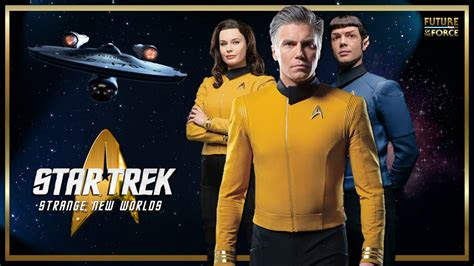
Streamin' Meemies: Star Trek: Strange New Worlds Season 1 Ep 10, "A Quality of Mercy"


A few posts back, I said episode 4 of this show, "Memento Mori," was "the direct descendant of the original series' 'Balance of Terror.' " That sentiment was accurate at the time--but this episode stepped up and said, "Hold my beer." 

This episode is a retelling of "Balance of Terror" in an alternate timeline, where Christopher Pike is the captain that fateful day the Romulans attacked Federation outposts bordering the Neutral Zone instead of James T. Kirk. Pike is shown this alternate future from his own future-Admiral self (dressed in the red admiral's outfit from The Wrath of Khan) to prevent past-Pike from taking a step that will wreck the timelines as we know them: to attempt to save one of the cadets who dies in the accident that disables Pike seven years in the future. Admiral Pike plunks Captain Pike in the alternate scenario and forces him to see it play out, and he (and we) see what the consequences of him attempting to evade his fate are. 

Parts of this are very fan-servicey (including a voiceover in the alt-timeline from an unseen Scottish engineer who protests, when Spock growls at him, "I'm an engineer, not a miracle worker") but most of it holds together well, mainly due to Anson Mount's performance. He really has been the MVP of this entire first season. He approaches the crisis true to the character we have been shown all along--a cautious captain who always tries diplomacy first, and falls back to violence as a last result. This is who he is, and it's not really his fault that his nature is so ill-suited to this situation. But unfortunately it is, and we see the grim results of that--when it's Spock who's catastrophically injured during the Romulan attack, not Pike, and that removal of Spock from all the things we know he will subsequently do results in the horrific future that Admiral Pike has been sent back to prevent. 

And, of course, we get a surprise visit from a young alternate James T. Kirk, who took a different route to the captain's chair in command of the Farragut, which came to assist Enterprise during the crisis. The Farragut is destroyed and the survivors beamed aboard Enterprise, and Kirk comes up with a magnificent bluff that nearly saves the day, were it not for the Romulans deciding the Federation is weak and declaring war on them. In thinking over this appearance by the new Kirk, Paul Wesley, I am....underwhelmed, shall we say. The actor didn't try to imitate William Shatner, which is a good and necessary thing, but his interpretation of the character didn't make much of an impression on me either. He certainly didn't do as fine a job with a legacy character as Ethan Peck and Celia Rose Gooding are doing with Spock and Uhura respectively. Still, since Kirk is supposed to be in Strange New Worlds' second season, I'm willing to give him the benefit of the doubt to see if he can develop further. 

(And the new actor hired to play the Romulan commander paled before the magnificence of Mark Lenard's portrayal. I almost wish they could've done some Uncanny Valley stuff and CGI'd Lenard into those scenes, since they were line-for-line recreations of the original.)

The season also ends on a cliffhanger, as Una Chin-Riley is arrested for hiding the fact that she is Illyrian. This is hinted at by the alternate La'an (who was aboard Farragut) when Pike asks if she's talked to Una and is told "she's not allowed visitors." In the middle of the crisis, Pike doesn't have time to unravel what's going on, but we can see from the look on his face as Una is taken away that he's going to raise all sorts of hell over this. 

Altogether, I think this was a successful first season, if a bit uneven. It's certainly been better than most Star Trek series are right out of the gate--The Next Generation's first season was famously crappy, Patrick Stewart notwithstanding (we shall not talk about the second season of Picard, which I dislike so much I haven't been able to write about its finale). Hopefully if what happened with Una is what starts off the second season, we will a) be able to explore her character more, which was shamefully lacking this season; and b) move in a bit more of an original direction. 


July 3, 2022

Streamin' Meemies: Star Trek: Strange New Worlds Season 1 Ep 9, "All Those Who Wander"


Following the last two lighter episodes, I thought the remaining episodes of the season would be heavier and darker.....and wow, was I ever right with this one. It's the darkest episode of the season. But it's also one of the best. 

The Gorn have been the running antagonist of the season, and in this episode we got to see them in their computer-generated glory. Of course, this being CGI and not the cheesy bipedal 60's suit, they were a lot more menacing. The head design was pretty similar to the adult Gorn seen in the original series' "Arena," but the babies are apparently more quadripedal, at least in the early stages of their development. They also grow terrifyingly fast, which is why they attack and eat anything around them, including each other. This and other facts about Gorn hatchlings are used by La'an to save as many of the crew as she can.

Obviously this scenario owes a lot to Alien, including the hatchlings bursting out of the body of a hapless blue-skinned guest star. In fact, I suppose this episode could be construed as Star Trek's version of Alien, albeit without the greedy murderous corporation. So I guess La'an would be....the Ripley analogue? If so, Christina Chong does a good job of it, including her cathartic shriek when she smashes the frozen hatchling at the end. 

The setup is simple: Enterprise is on the way to deliver vital time-sensitive supplies to Deep Space Station K-7 (which hasn't gone all tribble-ley yet), when another priority one mission comes in: the Peregrine, exploring beyond Federation space, send out a distress call and makes an emergency landing aboard a Class L (icy) planet. Since Enterprise cannot divert from her primary mission, Pike tell Una to complete that and he will take a landing party to see what happened to Peregrine. He words this as "taking the kids [meaning the cadets, including Uhura, who have come to the end of their rotations] on the station wagon for one last road trip." (Which is fine for the viewer, but made me wonder how anyone born and living in the 23rd century would even know what a "station wagon" is. This scene was delightful, however, as Pike holds his briefings in his quarters over breakfast or some other meal, and in this one even made Spock do the dishes.)

On the planet where Peregrine set down, they find the ship intact and the crew dead, and killed in a messy, brutal fashion. There are two survivors, a human girl, Oriana, and the aforementioned blue-skinned alien the magical universal translator apparently can't talk to (which leads to one of the few humorous moments in the episode, as La'an says, "Uhura, do something," and Uhura blurts out, "That's not how linguistics works!"). But the logs from the dead captain tell the tale: the Peregrine picked up three castaways on a Class M Planet, these two and an Orion...and the Orion was infected with Gorn eggs. Oriana says "the monsters are all gone," but we soon find out that's not true. The blue-skinned alien starts wheezing and gasping in Sickbay, and four hatchlings bust out of him. 

From then on it's a race to kill the hatchings before they pick off the landing party. The landing party works together to use the awakening ship and the Gorn's hatred of cold to their advantage: they lower the temperature in sections of the ship at a time, and use a fast-running Uhura and La'an to lure the hatchlings to one particular section. Much of this is shot from the viewpoint of the Gorn, their eyes seeing a greenish background and a running white bipedal form. The remaining hatchling is lured into the cargo bay (which is open to the planet's surface), and both Hemmer and La'an hide in the hexagonal storage units we've seen in the Enterprise's corridors before, with the hatching shrieking and slobbering its green mouth-ooze on the hatch. Hemmer sprays the hatchling with liquid nitrogen, and once it's immobilized La'an climbs out of the hexagon and smashes it to bits.

That's not the final shoe to drop, however. We've already had our two sacrificial "redshirts," two cadets, set up in the opening scene, where one is made Lieutenant and another is commended on her graduation. And since we know that the several series regulars in this episode aren't going to die just yet, we think everyone else is safe. Only they aren't. When one of the hatchlings came upon Hemmer and Uhura in engineering, it sprayed him across the face with its acid....but as La'an knew and Hemmer realized, that acid also included eggs. And so Hemmer, after dispensing some final words of wisdom to a weeping Uhura, walks out the back of the open cargo bay and plummets to his death. 

Please don't say, "Hemmer, we hardly knew ye," because we did, and it hurt. He was only in, what? Four, five episodes and a handful of scenes? But the writers did such a good job with him, showing first his egotism and arrogance and later his vulnerability through his interactions with Uhura and M'Benga, that this was very much not a "redshirt" death. And even in his final scenes, he continued to gently advise Uhura, telling her that she shouldn't turn away from her gift for creating bonds: "Of course the people you care about are going to cause you pain. It will hurt, but the love it yields will far outweigh the sorrow." And since the last shot is of Uhura going to the bridge and looking and the communications station, we are left with the strong inference that this is what will cause her to decide to stay in Starfleet. 

There are a couple of other important emotional moments in this episode: to lure the hatchling to the trap prepared for it, Spock has to unleash his Vulcan rage, which he does to the point he can't control it afterwards. At Hemmer's funeral, he abruptly leaves and Christine Chapel follows him to see him smashing his fist into the bulkhead. Facing a Vulcan's fury could be a scary thing, but Chapel doesn't flinch: she tells him his anger and pain doesn't make him weak, it makes him human, and hugs him. There will be repercussions from this, or at least I hope so, as it seems too important a character moment to be dropped, even for a more episodic series like this one. La'an also comes to a turning point, as she discovers some hints as to where Oriana's family might be and asks Pike for permission to take extended leave to pursue them. 

With only one episode left, this first season of Strange New Worlds has been, in my opinion, a rip-roaring success. We just need more Una Chin-Riley going forward, as out of all the regulars, she has been the least served. 

June 25, 2022

Streamin' Meemies: Star Trek: Strange New Worlds Season 1 Ep 8, "The Elysium Kingdom"


I don't know if the intention was for this show to separate its first batch of episodes into various shades of heavy drama and lighter character-based comedies, but that is more or less what has happened. The first four episodes were straightforward drama, and then we had the body-swap goofiness of "Spock Amok" and the "YARRRRR PIRATES" satire of "The Serene Squall." ("Please stop," begged Una.) (Of course, in between was the downer of "Lift Us Where Suffering Cannot Reach," with the ghost of Ursula K. Le Guin looking on and raising her eyebrows.) This episode is a combination of kids' fantasy fluff, Anson Mount's pitch-perfect portrayal of a cowardly obsequious snake, and the real heart of a father who, for his daughter's sake, has to let her go. 

It's also Dr. M'Benga's episode, wrapping up the subplot of his terminally ill daughter whom he has been keeping in the emergency medical transporter buffer as he searches for a cure for her condition. This was always going to be a delicate balancing act, as he has to take her out of the buffer at regular intervals for a minimum amount of time (never pinned down, but I got the impression that it had to be at least once every twenty-four hours) to prevent her pattern degrading. This forced exodus from the transporter lets her disease progress despite M'Benga's best efforts, and in this episode he admits she doesn't have much time left. 

The Enterprise is surveying a nebula, and when they're done with the survey and try to leave they can't. On the bridge, Ortegas is thrown to the floor, and Pike summons M'Benga to the bridge. When he gets there the door whoosh open on a transformed bridge, festooned with greenery (I imagine the plant budget for this episode nearly busted the bank--vines, ferns and ivy was everywhere), and the bridge crew were wearing costumes that looked like they were lifted wholesale from a Rennaissance Faire. M'Benga is also wearing a costume and bearing a crown, and the others call him "King Ridley." He realizes that what he is seeing and hearing, and the character he is apparently playing, have been lifted from the book he has been reading to his daughter Rukiya over the months, "The Elysian Kingdom" (written by none other than Deep Space Nine's Benny Russell). The bridge crew members have been drafted into role-playing the characters from the book: Pike is the craven, foppish chamberlain Sir Rauth, La'an is the Princess Thalia, Uhura is the enemy Queen Neve, Spock is the wizard Caster (and Ethan Peck looks damn good in his outfit, wizard staff, and long wig), Ortegas is the swordsperson Sir Adya, Una is Zymera the Huntress, and chief engineer Hemmer (a very welcome return, especially with his line "THE MAGIC OF SCIENCE!") is another wizard, Pollux. 

M'Benga has to see the story through to the end, with the help of Hemmer. The resolution takes an unexpected turn when it's revealed that the entity behind this is one of Star Trek's go-to tropes, the godlike energy being: in this case a Boltzmann brain, a spontaneously generated intelligence in the nebula that sensed Rukiya in the transporter buffer and reached out to her. The entity is also managing to hold Rukiya's illness at bay, at least as long as the ship remains where it is. If the entity releases the ship and the Enterprise leaves the area, the illness will return. Which leads to M'Benga's unexpected, poignant choice: he lets Rukiya go with the entity to give her a chance to live. She returns seconds later as a grown woman (the entity, who she has named Debra after her [presumably dead] mother, can apparently bend time as well), to thank M'Benga for letting her go and to tell him she is happy. 

Well. That was an emotional turn, and uplifted the entire episode, though I'm a little surprised Rukiya's predicament got solved in the first season. But though this episode was generally enjoyable (particularly Anson Mount's brown-nosing snarkiness), I think the comedy well has pretty much run dry. However, since there are only two episodes left, I imagine we'll return to the heavier drama next time. 

June 20, 2022

Streamin' Meemies: Star Trek: Strange New Worlds Season 1 Ep 7, "The Serene Squall"


The thing about this show being (mostly) episodic is that there are different tonal shifts with each episode. "Children of the Comet" was full of the joy of exploration, "Memento Mori" was as serious and suspenseful as a heart attack, and "Spock Amok" was a more lighthearted romp that nevertheless dug into the characters and relationship of Spock and T'Pring. This episode does a bit more of that, with the addition of some character beats for Christine Chapel, all wrapped up in an episode that's halfway serious and halfway a satire of the "space pirates take over the Enterprise" concept. Oh yeah, and the pretty bow on the top is an excellent performance by guest star Jesse James Keitel as Dr. Aspen/Captain Angel. 

The serious part of this episode is the basic setup: the Enterprise is taken on a wild goose chase (unknowingly) at the behest of Dr. Aspen, a counselor-turned-humanitarian who has been running aid missions to non-Federation space. The chasee turns out to be the Orion pirate ship the Serene Squall, who hoodwinks and takes over the Enterprise. Pike and crew implement the "Alpha Braga IV" strategy, fomenting an internal mutiny, while Spock, Christine Chapel and Dr. Aspen commit to the more straightforward method of attempting to fight off the invaders. That is, until the plot twist where Dr. Aspen reveals themself to be Captain Angel, the real leader of the Serene Squall, who has targeted the Enterprise and Spock for a specific purpose.

(The actor, Jesse James Keitel, is transgender. So is the character, but it's not remarked upon except for everyone using "they/them" pronouns. Keitel also turns in a marvelous performance, playing Dr. Aspen as a straightforward, empathetic and competent counselor with some rather useful advice to Spock about accepting both his human and Vulcan halves, and Captain Angel as a bit of a drama king/queen. Of course, when you get to the final scene, all of the Dr's and Captain's advice takes on an entirely new meaning.)

The satire part of the episode falls to Pike, and may I say that Anson Mount obviously had a glorious time making this episode? From his objecting to his Starfleet nickname of "Boy Scout," to his leading an away team to the supposed colonists' ship (and Una remarking on him "flouting the rules") to his immediate manipulation of the pirates by way of cooking them a good meal, persuading them to sell the Enterprise crew to the Klingons, and pitting crewmembers against one another to start the mutiny, to the final scene back on the Enterprise (which almost looked improvised to me) where he starts talking like a pirate, with over-the-top "Yaaarrrrrrs" and "walk the planks" (and Una begs, "Please stop"), Mount was having a hoot. On the Serene Squall's bridge, there was an actual wooden steering wheel--I mean, obviously that was for looks, but Pike stood there twirling the thing as they were bearing down on the Enterprise (and his asking Erica Ortegas to fire phasers to temporarily immobilize his ship, gently, came out sounding so pained). 

Spock and T'Pring also come to a better understanding of each other through these events. At the beginning, T'Pring tells Spock she has been "doing research on human sex" (and Ethan Peck delivers Spock's response to this, the single word "What?" perfectly--he sounds like he's choking on his own spit). At the episode's climax on the bridge, when Spock throws a monkey wrench into Angel's plans by revealing to T'Pring a pretend affair with Christine Chapel (and kissing Chapel quite soundly on the bridge to prove the point) in an attempt to get T'Pring to renounce him and leave him to his fate, T'Pring goes along with it. After everything is over, she meets Spock in his quarters and tells him she knew he could not have feelings for Nurse Chapel. She also notes that his human side is a strength as it provided him with the passion  necessary to pull the ruse off. It's very interesting that the writers are exploring and deepening Spock's and T'Pring's relationship, even though we already know, unfortunately, how it will end. 

But the final stinger in the episode is the reason Dr. Aspen/Captain Angel captured the Enterprise to begin with. They wanted to use Spock's relationship with T'Pring, and her status as head of the Vulcan Criminal Rehabilitation Center, to force her to release a prisoner who is Angel's lover or husband. Angel called him "Xavareous," but as she talks about him (and the fact that this Xavareous told Angel about Spock!) Spock realizes who it is. The final scene in the episode takes us back to T'Pring's rehab center as the camera zooms to the back of a Vulcan prisoner's head. Spock's voiceover tells us it is "a Vulcan I have been instructed to avoid at all costs. My half brother, Sybok." 

Well, hell. I guess the almost universally maligned original series movie Star Trek V: The Final Frontier was good for something after all. 

I certainly hope they're setting things up for both Angel's and Sybok's return, as Jesse James Keitel stole the show out from under pretty much everybody. The actor playing Sybok didn't get any lines or even a head-on shot, but as the casting is generally spot-on this series I would like to see him again. I don't think I would rate this episode as the best of the season, but it was pretty solid. 

June 12, 2022

Streamin' Meemies: Star Trek: Strange New Worlds Season 1 Ep 6, "Lift Us Where Suffering Cannot Reach"


After the lighthearted tone last time out, this episode takes a decidedly darker turn. It's the darkest episode of the season so far. It's also based on (or inspired by, at the very least) Ursula K. Le Guin's famous short story, "The Ones Who Walk Away From Omelas." This story is almost fifty years old, so I'm sure a sizable portion of the audience hasn't read it. I'm not going to say which is better, the episode or the original story, but I think you should read the story to get a fuller picture of what is happening. 

This is another Pike-centric episode, with Dr. M'Benga as a secondary featured character. Arguably M'Benga gets the greater plot movement, as he receives a theory of a possible treatment for his daughter. We see his daughter Rukiya out of the transporter buffer for a greater length of time than previous, and it's evident that she's getting tired of staying there, even though it is keeping her alive. Christopher Pike reconnects with an old love, and gets an offer to join with her people, the Majalis, to avoid his fate. (Honestly, I wonder why this hasn't been discussed more often. He knows what's going to happen, and he knows when it is going to happen, so it seems to me somebody should be talking about inspecting/repairing the component that fails beforehand and making sure the cadets who are shown to be in danger simply aren't anywhere near the fated spot that day. The multiverse is a thing in Trek, y'know? So the circumstances are different, the timeline branches, and life goes on.)

(Of course, that would also upset fifty-five years of established Star Trek canon, but hey. Anson Mount is doing a good enough job with this character--a track record he continues here--that I wouldn't mind a little retconning.)

Cadet Uhura also has an important role to play in the plot, as does Security Chief La'An Noonien-Singh, who is rapidly becoming one of my favorite new characters. One person who is absent for the second episode in a row is the irascible Andorian engineer Hemmer. Maybe they don't quite know what to do with him yet? Although the last time we saw him, in episode 5, "Memento Mori," we found out a bit more about him and got a glimpse of the person underneath the arrogant, egotistical mask. Perhaps the writers are thinking a little Hemmer goes a long way? That may be so, but I think he's an interesting enough character to support a brighter spotlight. 

As for this episode....I think it's arguable whether it 1) stands up to the original Le Guin story; or 2) is a coherent narrative in and of itself. In the end, Alora is right that the Federation has no jurisdiction over what her people do; but on the other hand, Pike could certainly raise enough hell to force the Majalis to reach out to other Federation members to see if their centuries-old technology could be weaned away from demanding "the neural network of a child" to support it. There are other floating cities in the Federation, after all, going back to the original series' "The Cloud Minders." That wouldn't save the kid in this episode, but it would save other children going forward. 

Thinking along that line, this is the first episode where this series' episodic format is not successful. This story and the fallout thereof really deserved another episode or two, I think. Perhaps it could be revisited further along the line? (Not that any of the powers-that-be are listening to me, but I'm going to throw my opinion out there anyway.) Unfortunately, while Anson Mount does his usual excellent job, and Babs Olusanmokum shines as Dr. M'Benga, this episode is not the best of the season (that spot is co-shared with "Memento Mori" and "Children of the Comet"). It's not quite a dud, but....well. I'll stop there, I guess. 

June 7, 2022

Streamin' Meemies: Star Trek: Strange New Worlds Season 1 Ep 5, "Spock Amok"


After the first four episodes of the season (and especially the last, "Memento Mori") we needed a lighter episode, and this is it. The Enterprise is in spacedock for repairs and the crew is on shore leave (except for Captain Pike, who has a diplomatic mission to finish up) for some needed downtime. But while this episode has its fair share of laugh-out-loud moments, there is also some good character work done for Spock, T'Pring, and Christine Chapel.

There are three main interweaving storylines: Pike's mission; Una and La'an, who stay behind on the ship, getting sucked into "Enterprise bingo" (a list of absurd and/or dangerous tasks to be checked off); and T'Pring meeting Spock to spend time together. We open with a dream sequence lifted directly from the original series' "Amok Time," with Spock coming to marry T'Pring and realizing he is in his human form, and her saying "I will not marry a human" and calling kal-if-fee--the challenge--on him. Only he doesn't fight Kirk--he fights his Vulcan half. (The original series music is also used here to great effect.) In fact, Vulcan Spock kicks Human Spock's ass, and Human Spock is about to get his head chopped off by the lirpa when Spock wakes up. This opening clearly depicts Spock's fear: that T'Pring will end up rejecting him because of his half-human heritage. This is shown as he yells at his Vulcan half during the fight: "I'm not human. I'm not.

This theme of Spock and T'Pring each fearing the other's reactions and not understanding each other continues throughout: when T'Pring arrives, she notes Spock's quarters are "too human." He says he's redecorating (he's really not). We find out what T'Pring does: along with her colleague T'Pyll, she "undertakes to rehabilitate those who have committed crimes by showing them the true path of Vulcan logic," which rather sounds like a combination of bounty hunter and social worker? At any rate, she's still expecting Spock's duties to interfere, even as she tells him "We must prioritize our relationship." 

Unfortunately, what she fears comes to pass. Spock had agreed to help Captain Pike in negotiating with the R'ongovian Protectorate to join the Federation before the Klingons and/or Romulans can beat them to it. (Admiral Robert April makes a return appearance, and Pike is wearing the green uniform from the second season of the original series, although he doesn't fill it out quite as well as William Shatner did.) The R'ongovians arrive early and insist on starting the negotiations right now, which spoils Spock's dinner plans with T'Pring. When he briefly returns to his quarters to tell her this, she is not pleased. "I am concerned that your time in Starfleet may be causing you to behave in a manner so human we may ultimately find ourselves incompatible." 

During another break in the negotiations, Spock is sitting in one of the starbase's bars/eating areas, and is approached by Christine Chapel, who is also on her shore leave. She's actually using Spock to get away from her boyfriend/fling, who is questioning her about where their relationship is going, which she doesn't want to hear. Spock asks her for advice, and after she hears what's going on with T'Pring, she tells him that although he's an extraordinarily intelligent person, he's also being an idiot. "I feel I should have seen that coming," Spock says, with such a dry tone it made me laugh out loud. Chapel says he has to put T'Pring ahead of his duty, as "that's what being in a relationship is," and says T'Pring most likely feels misunderstood. Spock then returns to T'Pring and comes up with the idea of a "Vulcan soul-sharing," a deep mind meld wherein they will share each other's katras and deepest thoughts. They perform the ritual and end up swapping katras, with each in the other's body. This also provides a nice opportunity for both actors, Ethan Peck and Gia Sandhu (who looks quite a bit like the original series T'Pring, Arlene Martel) to stretch and copy each other's character mannerisms, which they pull off pretty well. 

But this development leads to the episode's crisis point, because the negotiation with the R'ongovians have fallen apart. They don't want to speak to Pike any longer, and will speak only to Spock. So Pike goes to Spock's quarters to tell him what's happening, and gets a bomb dropped on him in turn, as Spock and T'Pring admit they are now in each other's body. T'Pring-as-Spock: "Now that you know, you can likely tell the very clear differences in our mannerisms." "Yeah, totally," Pike says, continuing Anson Mount's record of letter-perfect line deliveries. T'Pring and Spock try to get out of it, but Pike says the negotiations depend on it, and they reluctantly agree. T'Pring-as-Spock goes with Pike, and Spock-as-T'Pring gets dragged into T'Pring's job, as her assistant T'Pyll says their target Barjan will talk only to her. 

We then see them doing each other's jobs and temporarily living each other's lives. T'Pring-as-Spock talks to the R'ongovians and during that conversation they begin to sound an awful lot like him, which Pike picks up on. He also realizes T'Pring really isn't suited for this and ends up interrupting them, taking "Spock's" side, which impresses the R'ongovians. So much so they say they will give Pike the final "summation," the last word, before they make their decision about joining the Federation. Meanwhile, Spock-as-T'Pring goes to confront Barjan, but also seeks out Christine Chapel and asks for her help in solving his and T'Pring's problem(s). Chapel accompanies him to the confrontation with Barjan, who is an arrogant, superior little Vulcan snot, piling on insults about T'Pring's betrothal to the "son of Sarek" and making snide remarks about humans until Spock-as-T'Pring finally decks him. Which got another resounding laugh out of me. 

Back on the Enterprise, with both Chapel and Dr. M'Benga prematurely returned from their shore leave, M'Benga works a little handwaving technobabble magic with sea-urchin paste that will drive the katras from the wrong bodies back to the right ones. After all the dust has settled, Spock and T'Pring are finally honest with each other. 

Spock: "I admit I was afraid that I was not Vulcan enough for you. That you saw me as a human, more concerned about my duty to Starfleet than to my culture or my betrothed. My feelings about Vulcan are not easy. On our world, I was forced to prove my Vulcan-ness. Any deviation was seen as proof I did not belong. In Starfleet, I am accepted for who I am. Half Vulcan, half human. I am, quite simply, Spock." 

T'Pring: "I know how much you value duty. And I feared that you saw our relationship as just that, a duty, rather than something more. We must both want to be here." 

Well, they both clearly do, as they kiss and the camera pans up towards the ceiling. 

So Captain Pike ends up concluding the negotiations with the R'ongovians. They had earlier admitted that "empathy is a hallmark of our people," and Pike, remembering that and also drawing on his observations of what happened during previous negotiation attempts, plays a hunch of his own. He's brutally honest with them, saying that from the R'ongovians' point of view, it may not be such a great thing for them to ally with the Federation. They listen, say "Thank you," and walk out. Pike explains: "The R'ongovians were rude with the Tellarites, reasonable with us, and deeply logical when talking to a Vulcan. What if this was a diplomatic technique? They responded positively when I took Spock's side, even though it was in direct violation of what they'd asked. Maybe they're just looking for somebody to take their point of view. Radical empathy. Maybe what they value the most in others is the capacity to see things their way." 

This is spot-on, as we see a minute later when the R'ongovians get in their ship, fly the Federation flag, and deploy their solar sail as they leave (in a gorgeous effects shot). We are also shown Spock and T'Pring in bed together (hey, in this modern era, Spock can have a sex life!) and T'Pring admitting, "You know, I enjoyed being Mr. Spock for a day."

Spock: "In the spirit of total honesty, I should probably tell you I punched Barjan."

T'Pring: "Having met him, that is logical." 

So this was an interesting character study of both Spock and T'Pring, and Christine Chapel to a lesser extent. Obviously the powers-that-be are not interested in putting Spock and T'Pring at odds quite so soon, even though we know that's where they'll end up. (Although I'm now itching to find out more about the pilot Erika Ortegas. I hope she gets an episode soon.) We also see an exploration of Una's and La'an's friendship (although Una's hair is pulled back in a very unflattering bun that looks like a knob on the back of her head). That's probably the lighter of the three storylines, but the two of them have a good camaraderie. At any rate, this episode was a nice break. 


May 30, 2022

Streamin' Meemies: Star Trek: Strange New Worlds Season 1 Ep 4, "Memento Mori"


This fourth episode, while not my favorite so far--that goes to "Children of the Comet"--was still damned good. It was a tautly written battle drama dripping with suspense, hearkening back to the past method of starship warfare, likening it to submarine war. In fact, you could call this episode the direct descendant of the original series' "Balance of Terror." The difference here is that we never see the antagonists, though we see their ships and their peculiar method of communicating ship-to-ship via light code (and we hear their clicking vocalizations, which serve to heighten the suspense). This is because the antagonists, which seem to be shaping up to be the series' Big Bads, are the reptilian race the Gorn from TOS.

People are of two minds about this, of course. We will first see the Gorn in the Trek timeline ten years in the future, when Kirk battles their captain in "Arena" and refuses to kill him. (Assuming we don't see a CGI glimpse of one in a future Strange New Worlds episode [at least I assume it would be CGI, although honestly anything would be better than that godawful 60's lizard suit]. That really wouldn't square with the canon that they had never been seen before, but I think La'an has a pretty good idea of what the Gorn look like, seeing as her colony ship was taken by them. Although when I watched the episode the second time, she doesn't actually say they are a reptilian species. She just says the people aboard the Puget Sound were hunted as prey and fed to their hatchlings.) Not seeing one onscreen is dictated by past canon, but it also ratchets up the tension very effectively in this episode. 

This is La'an's episode, following the established pattern of spotlighting one of the regulars each time out. We find out more about what happened to her, and she comes to a bit of a epiphany as she works through her memories of the attack, which are pulled from her mind via a mind meld with Spock at La'an's request. (She also sees a bit of Spock's memories, specifically the existence of a sister who sacrificed herself for him, a sister that does not exist in Starfleet records. That's more than a bit of a plot hole, as Michael Burnham, y'know, started a bloody war with the Klingons, and served for seven years aboard the Shenzhou, but whatever.) At the beginning of the episode, the crew is celebrating Starfleet Remembrance Day, where crewmembers wear pins with the logos of ships crewed by their loved ones, ships that have been lost. La'an refused to wear hers, and gets into a bit of a tiff with Una over it, saying she will not go to therapy because she isn't broken. That remains to be seen, but at the end she puts her Puget Sound pin on. She also gets a lesson in inspiring the crew from Captain Pike, who gently but firmly tells her to stop being so pessimistic about the Gorn and proclaiming the Enterprise can't win against them (even though that probably would have been the case, were it not for Pike's leadership and Spock's thinking outside the box) and start giving the crew something to believe in. 

We also find out a little more about the grumpy, irascible, arrogant chief engineer, Hemmer. His "I am superior; look at me" shtick was already wearing pretty thin, but here we find out he actually wanted to be a botanist. He doesn't really answer Uhura's question of why he joined Starfleet, but he does say he is sticking to his Aenar pacifist philosophy: "I will not fight for Starfleet, but I will defend its ideals. Pacifism is not passivity. It is the active protection of all living things in the natural universe." He also says he's going to give Uhura a passing grade on her engineering rotation, so hopefully he won't be so much of an ass in the future. 

But it was Anson Mount who really carried this episode; he commanded my attention in all of his scenes, as Pike did everything he could to keep his crew alive and get out of this mess. Now, granted, some of the risks he took here may have been predicated on his knowledge of the future: that, for instance, Enterprise wasn't going to be crushed by its dive into the brown dwarf's depths (although this did give us a neat scene of the ship groaning as it descended to deeper pressure, which again reminds one of submarine warfare). Which I think should be a subject for conversation with Una at some point? Anyway, the final shot of Enterprise slingshotting the black hole's event horizon and dropping its decoy along the way, to make it appear to the Gorn as if the ship had been destroyed, was expertly done by the special effects crew. And the relief that flows across Pike's face when Uhura answers him, telling him both she and Hemmer are still alive, was just a tour de force of acting.

(And speaking of Una, that was the episode's biggest plot hole. Just last time out we had an extensive discussion of her super-duper Illyrian genetically modified immune system, which not only defeated a light-transmitted virus but cured her of fatal radiation exposure--and not only her, but the antibodies Una's immune system generated apparently jumped, er, somehow, to the nearby body of La'an as well. But Una gets skewered by shrapnel during the first Gorn attack and staggers into sickbay still bleeding and not yet healed? Now granted, it would not have been a good thing for her immune system to heal over the wounds while still leaving the shrapnel inside, particularly the fragment lodged in her abdominal aorta. Chapel would've had to re-open Una's wounds and remove the fragments if that had been the case. And certainly neither Christine Chapel nor Dr. M'Benga was going to blurt out, "Hey, your super-duper Illyrian immune system healed you already!" in the middle of the crisis. Still, something should have been said about it.)

Nevertheless, this was an exciting thrill ride of an episode, and is my second favorite so far. This series is hitting its stride much faster than Discovery did, and is shaping up to be one of the best of the new iteration of Star Trek

May 25, 2022

Streamin' Meemies: Star Trek: Strange New Worlds Season 1 Ep 3, "Ghosts of Illyria"


So the pattern of this show seems to be set. Plot-wise, the episodes are one story and done. Character-wise, the arcs seem to be continuing through the season. And so far, the evidence shows that one character in particular is spotlighted per episode. In the first episode, it was Captain Pike; in the second, Cadet Uhura; and now in the third it is Number One, Commander Una Chin-Riley.

(Although that comes with a bit of a caveat in this episode, as Dr. M'Benga also has a character spotlight, even if it's not the primary one.)

The episode opens with the First Officer's log, Una explaining that Enterprise has been dispatched to Hetemet 9, the site of an abandoned Illyrian colony. Illyrians are a humanoid species forbidden to join the Federation because of their habit of genetic modification. Enterprise was sent here to find out what happened to the colony, but they can't stay on the surface long because of ion storms, "one of which is fast approaching." As the landing party gets ready to leave, Pike goes to grab Spock, along the way collecting an ensign who is shining his flashlight around a just opened cabinet (as ominous music plays). Una and the rest of the landing party try to transport out, but Kyle can't get a lock on them. He calls down to Chief Engineer Hemmer for help, and Hemmer (accompanied by his usual snotty remarks) reroutes auxiliary power to give the transporter a boost. (The camera lingers on the engineering set, which is gorgeous.) This works so quickly that Kyle gasps: "How did you do that?"

"I am a genius. Move quickly." 

(The actor is playing Hemmer's arrogance to perfection, but man, it's already getting tiresome. I hope something happens soon to take this jerk down a peg.) 

Pike and Spock are still on the surface; in fact, Spock is pulling what look like lighted canisters out of the wall in the "library," and the one he is looking at is "a journal of previously undiscovered relevance." They go to the beam-out point, but the storm is too strong and Kyle can't get a lock on them, so they run back to the building to take shelter. Una goes to the bridge and explains the situation to the crew. 

Down one of Enterprise's corridors, Lieutenant Ortegas finds the same hapless ensign standing before a porthole, pulling his pants off. "It's too dark in here. I need to feel the light on my skin." She tries to talk him down, but he bashes his head through the glass (it's a damned good thing this is apparently a decorative covering, rather than the outer hull itself) and she has to wrestle him away while summoning security. The ensign isn't the only one: in her quarters, Number One looks at the decorative lamp and asks the computer to increase the illumination 25%. She also starts tearing at her uniform to expose more of her skin to the light. But then something strange happens: her face and hands start to glow red, and after a few moments she snaps out of it. Realizing something very weird is going on, she calls Dr. M'Benga and asks him the status of the landing party. The doctor says he was about to call her, because "I have several of them in here as we speak, presenting with some very curious symptoms." Una goes to sickbay, to find the people there have burned and/or shocked themselves to get closer to illumination: "They're being attracted to light." 

M'Benga: "So much so they're willing to hurt themselves to get to it."

The crew members have no viral/bacterial contagion as far as Dr. M'Benga can determine, but are showing severe drops in vitamin D. He says the landing party must have come into contact with something the transporter biofilters missed. Number One goes down to engineering to ask Hemmer about this, and the chief dismisses the idea: "Nonsense." He nonetheless says he will run a level 5 diagnostic, "which, I might add, may well take all night." Una goes back to the bridge and is briefly able to communicated with Pike, telling him she has a "situation," before the signal is lost. 

Next, she goes to the ready room and asks for everything the computer has on Illyrian genetic modifications related to disease control. Before she can really get started on what's available, La'an enters in response to her summons. Una tells La'an what's going on and asks her to have her security team keep an eye out for "strange behavior." La'an sees what she's researching and asks if what's happening has anything to do with the Illyrians. "It seems to me things like this are exactly why the Federation is so wary of genetically modified species like the Illyrians. You start breaking down the genetic code, who knows what the unexpected consequences can be?"

Una: "If the problem originated with the Illyrians, maybe they could also provide us with a cure."

La'an: "Isn't using any Illyrian medical tech against Federation regs?"

Una: "Thanks to the Eugenics Wars. I imagine you know all about that period in history."

Then it comes out: La'an is a descendant of Khan Noonien Singh, and was tormented as a child because of it. But that conversation is cut short as La'an begins exhibiting symptoms, remarking how dark it is in the room before shining Una's desk lamp full on her face. She's taken to sickbay, where everyone realizes the contagion is spreading but they have no idea how it's happening. Dr. M'Benga urges a full lockdown, and Una orders it. 

During the lockdown, Uhura is in her quarters in bed. (It's rather convenient that her "bedroom" is a bunklike nook in the wall with a sliding door that puts her in total darkness.) She is awakened by her roommates experiencing symptoms. In sickbay, Dr. M'Benga notes there are more than 50 affected people. In the middle of all this, Hemmer comes to sickbay, snottier than ever and still running his diagnostic, wanting to check the emergency medical transporter. M'Benga objects (and we see him surreptitiously flicking a switch that will dim the lights and agitate the patients): "Please stop messing around in here!" and Hemmer leaves. 

Down on the planet, the ion storm is still raging, and Pike is pacing in the library where he and Spock have taken shelter. Spock observes that "a watched kettle never boils," and when Pike corrects him with "Pot," notes that "You are deliberately mixing my metaphor to indulge your anxiety." Well, of course Pike is, because people are sick on his ship and he can do nothing. Spock is still reading the journal-canister he pulled from the wall (which is kind of weird, actually; that should be a tablet or a printed book or something, rather than a canister that looks like it could be used to shoot deposits through a bank's drive-through pneumatic tube). At any rate, he discovers this group of Illyrians wanted to join the Federation, so much so "they were attempting to reverse their DNA modifications to gain entry." But this conversation is cut short as they hear shrieking outside, and look out the window to see what appear to be orange energy beings flying through the storm towards them. 

As the storm progresses, the "ghosts" are gone....or are they? Spock mentions that "the journals did mention unconfirmed rumors of creatures living inside the storms," as they start pounding on the door. (With what, since they don't have any flesh-and-blood hands to pound with, I'm not quite sure, but whatever.) Pike is standing and facing their hastily erected barricade with his phaser drawn, and Spock (bless him!) is still trying to read his cylinder. Pike asks: "Does that thing have a setting for stun?" (This line, like all of Anson Mount's lines, is delivered to perfection.) 

"I am arming us with knowledge," Spock insists, and says the creatures started to appear as the Illyrians were dying from a mysterious disease. 

The storm intensified, popping Pike's ears. As Spock announces that it is now "fatal to organic life," the beings break through the door and stream in. Pike and Spock hit the floor, and the creatures hover over them, sheltering them.

In sickbay, Una is trying to figure out why Uhura isn't sick. Uhura says she went to bed--"I closed the door. I need it pitch-black to fall asleep"--and Una realizes the contagion travels on light waves. She decides to turn off the lights aboard the entire ship and sedate everyone in sickbay. She then goes back to researching Illyrian genetic modifications, and is interrupted by a "blackout override in the transporter room." Hemmer is there, in the grips of the infection and attempting to beam aboard a chunk of the planet's mantle (!!!) to bathe in its 10,000 degrees of light and heat. Una phasers him and carries him down to sickbay (although it's rather obvious the actor is carrying a pair of pants stuffed with straw and/or feathers and not the person). She dumps Hemmer in sickbay, and Dr. M'Benga says he needs to be sedated next. At this point, Una 'fesses up: "I'm immune. I've already come down with this and my immune system did what it was engineered to do. I didn't tell you earlier because I'm an Illyrian." It's clear she expects the doctor and Chapel to be shocked and fearful, but they're not. In fact, M'Benga is discouraged by her admission, as her blood, drawn earlier, has "no novel antibodies"--Una's Illyrian immune system burns out new infections immediately, and there is nothing there to synthesize. (In the background, La'an sits up, hearing this.) Una puts Dr. M'Benga out, and another crisis arises: "Warp core containment field has been deactivated." It's La'an, who knocked Chapel out and ran.

Una runs down to engineering, and she and La'an get in quite a fight. La'an gives a good account of herself, even as she is lashing out at Una, calling her "an augment, a monster," which is what La'an was called as a child. Una knocks La'an out, but the radiation levels have risen high enough that her immune system kicks into overdrive again as she crouches over La'an's unconscious body. 

On the planet, the storm is finally over. Pike asks why the energy beings saved his and Spock's lives but didn't save the colonists, and Spock theorizes that the energy beings were the colonists (which was obvious). He says the journal cylinder he was reading reported that the infected Illyrians ran into the ion storms, and due to some improbable handwaving technobabble the storms created the energy beings after the colonists' bodily deaths. 

In sickbay, Una wakes up Dr. M'Benga and says she has a cure. Apparently La'an, being so close to her when the containment field went down, received a high dose of radiation but was able to create "chimeric antibodies" (how would that even work? this stretched my suspension of disbelief more than a little) that Chapel was able to synthesize. Una then goes to talk to La'an and clear the air. She explains why her people bioengineered themselves: "My people were never motivated by domination. Illyrians seek collaboration with nature. By bioengineering our bodies, we adapt to naturally existing habitats. Instead of terraforming planets, we modify ourselves. And there's nothing wrong with that."

La'an: "If that's what you believe, why do you hide it?"

Una: "I've been hiding it from a lot of people. All I ever wanted, since I first saw the stars, was to join Starfleet." 

La'an, relenting a bit: "And you gave me that dream."

Pike and Spock have beamed back aboard by then, and Una goes to turn herself in. She admits to lying to Starfleet and breaking regulations, and presents herself for a disciplinary tribunal. Pike refuses to accept her confession. Una points out "if you shelter me, they could come after you too."

"I welcome that discussion," Pike says, and calls her the "best first officer in the fleet." He tells Una to let him worry about Starfleet, and tasks her to fix the transporter's biofilter. Una investigates, and goes to confront Dr. M'Benga: "It was your medical transporter that inhibited the biofilters." He's storing something in it, something he risked the entire crew over, and she demands to know what it is.

"Not what," M'Benga says. "Who." It is his young, terminally ill daughter, who he's been storing in the pattern buffer, rematerializing her periodically. Her disease is brutal, but in the buffer it cannot progress, and he is hoping that in Enterprise's travels he will find a cure for her condition. He says he won't risk the crew again and asks to spend some time with his daughter before Una turns him in. But Una, paying forward what Pike has done for her, says she will provide him with a dedicated power source to keep the girl safely stored. 

The episode ends with Una making another log entry, recounting how she confessed to the captain and wondering if he only spared her because she saved the crew. She also wonders when, or if, the time will come when she will be free to be "just an Illyrian." Meanwhile, Dr. M'Benga is reading a story to his little girl in sickbay. 

Well. This was a taut little adventure story, shining light on Number One and M'Benga in particular (Una is shown to be decisive, level-headed and very competent, and Rebecca Romijn plays it beautifully) while strengthening Pike and Spock's relationship. But there are also decisions made in this episode which will presumably (at least I hope they will be followed up on) come back to bite Captain Pike in the ass. I don't think this was quite as good as the first two episodes, but it was still a solid hour of Star Trek