July 31, 2018

Hugo Reading 2018: Best New Writer


This award is also called the John W. Campbell Award for Best New Writer, and is stubbornly, defiantly Not A Hugo. (It's just a quirk of the system. Roll with it.)

The nominees:

Katherine Arden
Sarah Kuhn
Jeannette Ng
Vina Jie-Min Prasad
Rebecca Roanhorse
Rivers Solomon

My ballot:

Heroine Complex (Heroine Complex, #1)

6) Sarah Kuhn

The first chapter of this almost read like a parody of urban fantasy, with an Asian-American superheroine fighting off fanged demon cupcakes. A bit too absurd for me, unfortunately.
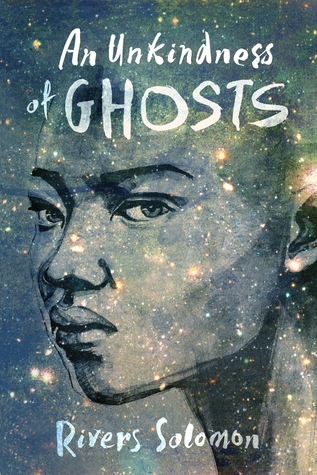
An Unkindness of Ghosts

5) Rivers Solomon

I didn't care for their book too much--a bridge too far on the handwavey science for me--but this author excelled with their characters, particularly the protagonist. A writer to keep an eye on.

Under the Pendulum Sun

4) Jeannette Ng

Now this is an intriguing book--a Fae gothic, the story of the first Christian missionaries to Arcadia, the lands of the Fae. It's an idea that's obvious and delightful, and made me wonder why on earth someone hadn't written this book before now. That I didn't rate the author higher testifies to the tough competition in this category.
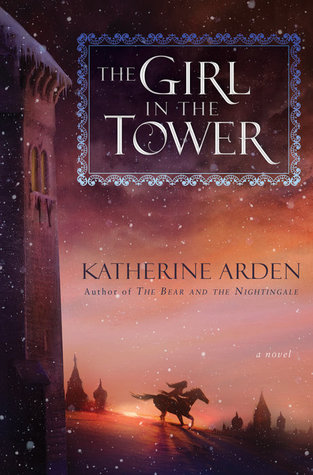
The Girl in the Tower (Winternight Trilogy, #2)

3) Katherine Arden

I believe Arden was actually nominated on the strength of her first book, The Bear and the Nightingale, a Russian folklore fantasy. I preferred her second book, pictured here.

Welcome to Your Authentic Indian Experience

2) Rebecca Roanhorse

Roanhorse just won the Nebula for what I believe was her first published story, "Welcome To Your Authentic Indian Experience." I wouldn't be surprised, and would be delighted, if she duplicated that hat trick with the Hugos.


1) Vina Jie-Min Prasad

Prasad made quite a splash this year, with two stories on the Hugo and Nebula ballots. The story of hers that most impressed me, however, didn't make either ballot--it's the funny and surreal "Portrait of Skull With Man," from Fireside Fiction.

This one was tough. I would be happy with any of the top 4.

July 29, 2018

Hugo Reading 2018: Best Fan Writer


Fan Writer is kind of a catchall category: in it you find professional writers and reviewers and artful amateurs. Just about anyone can qualify if you can establish a voice and an audience, which is nice.

The nominees:

Camestros Felapton
Sarah Gailey
Mike Glyer
Foz Meadows
Charles Payseur
Bogi Takacs

My ballot:

6) Bogi Takacs

I'd never heard of or read em before, although e has been involved in the recent Worldcon kerfluffle (which I am not commenting on here). In checking out eir blog, I decided some of the pieces I read there worked better than the ones included in the packet. Still, in the overall scheme of things, I thought e was just so-so. 

5) Mike Glyer

Mike runs File 770, a place where I hang out regularly. Both Mike and File 770 have won this award in the past. However, I don't think last year was his strongest. 

4) Camestros Felapton

Cam is one of the "artful amateurs" I spoke of. I also hang out at his place, and read a lot of the pieces in his packet in their original form, on the blog. Cam tends towards humor and whimsy in his writing, which I enjoy, but his pieces aren't quite up to the quality of some of the others. 

3) Charles Payseur

Charles runs Quick Sip Reviews and also writes for the Book Smugglers. His packet entries go a little deeper into his subjects, in particular making me re-evaluate a book I didn't like at all when I first read it, Sam J. Miller's The Art of Starving

2) Sarah Gailey

Sarah takes a little different tack with her included pieces that is very interesting. In "This Future Looks Familiar: Watching Blade Runner in 2017," she uses simple (but not simplistic) language to talk about the film. It's a marvelous review, and forces the reader to completely re-think the film, as well as the meanings of the words "empathy" and "human." Another piece, the riveting "City of Villains: Why I Don't Trust Batman," turns the character of Bruce Wayne inside out, showing that he is not the "hero" but is indeed a villain, this billionaire who has the money and power to make things better but throws it away with his vigilante's ego. It's really a flash story, Hugo-worthy in itself. 

1) Foz Meadows

This was a tough choice, picking Foz over Sarah. In the end, I went with Foz Meadows because of her gift for insightful and even-keeled analysis. This is shown in this lengthy article on HBO's Westworld, as well as this thorough deconstruction of Alien: Covenant. I love reviewers who can dig into theme and subtext and bring all sorts of interesting ideas to the light. Foz does this very well; her articles always make me think. 

Hugo Reading 2018: Best Graphic Novel


The nominees:

Bitch Planet, Volume 2: President Bitch, written by Kelly Sue DeConnick, illustrated by Valentine De Landro and Taki Soma, colored by Kelly Fitzpatrick, lettered by Clayton Cowles (Image Comics)
Black Bolt, Volume 1: Hard Time, written by Saladin Ahmed, illustrated by Christian Ward, lettered by Clayton Cowles (Marvel)
Monstress, Volume 2: The Blood, written by Marjorie M. Liu, illustrated by Sana Takeda (Image Comics)
My Favorite Thing is Monsters, written and illustrated by Emil Ferris (Fantagraphics)
Paper Girls, Volume 3, written by Brian K. Vaughan, illustrated by Cliff Chiang, colored by Matthew Wilson, lettered by Jared Fletcher (Image Comics)
Saga, Volume 7, written by Brian K. Vaughan, illustrated by Fiona Staples (Image Comics)

My ballot:

Consumer Grouch | The wonderful world of Consumerism

6) My Favorite Thing is Monsters, written and illustrated by Emil Ferris

This made a pretty big splash last year (it also just won three Eisner Awards, the comics industry's Oscars), but I couldn't get into it. The story was too big, too slow, and too sprawling, and the page layout (lined notebook paper) while appropriate for the story, began to grate on me after a while. Nope, not for me. 


5) Black Bolt, Volume 1: Hard Time, written by Saladin Ahmed, illustrated by Christian Ward, lettered by Clayton Cowles

I know next to nothing about Marvel's Inhumans, and this volume did little to enlighten me. It was a pretty self-contained story, about the king of the Inhumans waking up on an interstellar prison, his powers stripped from him. The art was interesting, bordering on the surreal at times. Okay, but not outstanding. 

Bitch Planet, Vol. 2: President Bitch TP | Releases ...

4) Bitch Planet, Volume 2: President Bitch, written by Kelly Sue DeConnick, illustrated by Valentine De Landro and Taki Soma, colored by Kelly Fitzpatrick, lettered by Clayton Cowles

Now we get into the better stuff. I actually prefer (and have bought) the individual issues of these, as they have extra content that fleshes out the world and the story. Either way, this is a frightening portrait of a hyperpatriarchal future society that is unfortunately all-too-plausible. 

Paper Girls, Vol. 3 TP

3) Paper Girls, Volume 3, written by Brian K. Vaughan, illustrated by Cliff Chiang, colored by Matthew Wilson, lettered by Jared Fletcher 

I call this the Little Series That Could. It surprised me last year when I first read it (never having heard of it until it appeared on the 2017 ballot) and it's still surprising me. This particular volume, with its time travel (back to 11,000 BC), is more firmly rooted in the SFF tradition. The characters are well developed and the unfolding mystery is fascinating. 

On The Shelf: @ImageComics Set To Release Volume 7 of # ...

2) Saga, Volume 7, written by Brian K. Vaughan, illustrated by Fiona Staples

For me, this series takes the biggest jump of all the finalists. The last time I tried to read this, I couldn't get into it at all. This time around, it impressed me greatly. The story made more sense (well, as much as this wacky, surreal universe ever does), and the greater emphasis on Hazel helped. The end is just chilling. 


1)  Monstress, Volume 2: The Blood, written by Marjorie M. Liu, illustrated by Sana Takeda

Marjorie Liu just won an Eisner for Best Writer (tied with Tom King), and Sana Takeda won two Eisners (Cover Art and Best Painter/Multimedia Art) for this series, and for very good reason. This is a richly imagined and fascinating world, and the art is gorgeous. The first volume of this won the Hugo last year. I don't know if Liu and Takeda can pull off the hat trick again, but I certainly hope so. 


July 28, 2018

Hugo Reading 2018: Best Related Work


(Note: Some of these books were not available at my library, so I had to rely on the limited excerpts included in the Hugo packet. This is not ideal, obviously, but was the best basis for comparison I had.)

The nominees:

Crash Override: How Gamergate (Nearly) Destroyed My Life, and How We Can Win the Fight Against Online Hate, Zoe Quinn (PublicAffairs)
Iain M. Banks (Modern Masters of Science Fiction), Paul Kincaid (University of Illinois Press)
A Lit Fuse: The Provocative Life of Harlan Ellison, Nat Segaloff (NESFA Press)
Luminescent Threads: Connections to Octavia E. Butler, edited by Alexandra Pierce and Mimi Mondal (Twelfth Planet Press)
No Time to Spare: Thinking About What Matters, Ursula K. Le Guin (Houghton Mifflin Harcourt)
Sleeping With Monsters: Readings and Reactions in Science Fiction and Fantasy, Liz Bourke (Aqueduct Press)

My ballot:

6) Iain M. Banks (Modern Masters of Science Fiction), Paul Kincaid

This was, I gathered, intended to be a scholarly, academic study of the man and his books. Unfortunately, it was way too scholarly and academic for this reader. The excerpt was hard to get through, and I can't imagine slogging through the entire book.

5) A Lit Fuse: The Provocative Life of Harlan Ellison, Nat Segaloff

Due to Ellison's recent death, I think this has a better chance of winning than it might otherwise have had. For me, it was just okay.

4) No Time to Spare: Thinking About What Matters, Ursula K. Le Guin

I'll be honest: I liked this book, but I didn't think it was top-tier, and I hope it doesn't win. For one thing, Le Guin won this category last year with Words Are My Matter, which I think is the superior work. Also, we gave the award to her while she was still alive, which is the better thing in my book.

3) Crash Override: How Gamergate (Nearly) Destroyed My Life, and How We Can Win the Fight Against Online Hate, Zoe Quinn

This was actually a pretty harrowing tale of Twitter mobs, harassment, and online hate. But Zoe Quinn is a survivor, and I liked how she came out on top, and used her experience to help other women.

2) Sleeping With Monsters: Readings and Reactions in Science Fiction and Fantasy, Liz Bourke

One mark of a good book, for me, is if reading a sample or excerpt makes me want to own it. That's what happened with this book. I like Bourke's conversational writing style, and I appreciate that she states her viewpoints and biases up front. They happen to fairly mirror my own, but if they didn't, reading her reviews would still be rewarding, which is a mark of their quality.

1) Luminescent Threads: Connections to Octavia E. Butler, edited by Alexandra Pierce and Mimi Mondal

I loved this. All those essays, from writers of many different backgrounds, expounding so eloquently on what Octavia Butler meant to them. It made me sad and angry all over again, knowing what we lost by her untimely death.

This is my last full weekend of reading (the voting deadline is Tuesday, July 31), so I may be throwing out quite a few entries over the next several days. I'll get through as much as I can. Onward.

July 22, 2018

Review: The Freeze-Frame Revolution

The Freeze-Frame Revolution The Freeze-Frame Revolution by Peter Watts
My rating: 4 of 5 stars

Peter Watts is one of the hardest of hard SF writers, and one of my favorite authors, and Blindsight is one of my all-time favorite books. This new novella rides the cutting edge of physics and artificial intelligence, in telling the tale of a far-reaching journey into deep time (literally, 66 million years) and what that does to the people who take it.

The Eriphora, an asteroid turned spaceship, is bound on a road to infinity--or maybe the heat death of the universe--constructing gate wormholes on an endless circuit spiraling around the galaxy. Sent out from Earth millions of years ago, it is run by an artificial intelligence named Chimp, and staffed by thirty thousand people, the overwhelming majority of whom remain in suspended animation for centuries between builds. Chimp handles most builds itself and only wakes up a few humans at a time, as needed. Our protagonist, Sunday Ahzmundin, is one of those people, awake for a few days every thousand (or thousands, plural) years.

This is the quintessential story of rats on an endless treadmill, and what happens when they want to break free. There is no settling on a habitable planet on this trip; Chimp will not halt the mission to let anyone off, and Sunday and her cohorts must go back into their cold sleep if they don't want to die during the hundreds and thousands of years of sublight travel between builds. Needless to say, this state of affairs begins to affect members of the crew, and a revolution starts to ferment. But how can any resistance come to fruition when the mutineers are awake only, as the back cover copy says, "one day in a million?"

Peter Watts' books are not easy reads, and this is no exception. They're full of crunchy, chewy, hard SF ideas, rigorous physics, and meditations on, in this tale, the nature of deep time and artificial intelligence. His books demand the reader's full attention and reward more than one pass. (In this case, even more so as there's apparently a hidden message in the text--just look for the periodic red letters. I'm decoding it now.) His work is also very dark--I don't think he could write a light fluffy tale to save his life. This certainly doesn't qualify, and in fact that's the only knock I have on it (though I should be used to Watts' unrelenting bleakness by now). The ending is rather abrupt, as the mutineers strike during the attempt to build a Hub, a central point for the branching of several wormholes. The artificial singularity at the ship's heart, used to generate the micro-sized black holes that then serve as the gate wormholes (see, I told you: physics way over most people's heads), is deliberately sabotaged by the head conspirator, with the immediate result that all hell breaks loose. The newborn black hole rips through the ship itself, breaching many of the asteroid's pocket ecosystems, spewing atmosphere, destroying several thousand "coffins" of sleeping crewmembers, and threatening to tear the Eriphora apart.

And...that's it. Sunday is forced back into her crypt, and we don't know who lives or who dies, or if the ship can repair itself. Supposedly there are some companion stories on Watts' website. Normally I would be, shall we say, a wee bit irritated at such an ending? But what came before is so good, so thought-provoking, that I think I can forgive Watts the ending, with perhaps only a bit of side-eye. Certainly the last few pages hint at, though probably not a happy ending, at least a...continuation? Sunday is talking to someone, a combination reader/character in the story, so maybe the ship didn't tear itself apart. At any rate, this is brilliant science fiction, and well worth your time.

View all my reviews

July 21, 2018

Review: Trail of Lightning

Trail of Lightning Trail of Lightning by Rebecca Roanhorse
My rating: 3 of 5 stars

As a genre, urban fantasy has been on the decline lately. A few years ago, it was all the rage. I know, because I bought a LOT of it. It didn't take long for it to settle into an all-too-predictable trope--the tough white chick with a troubled past and a huge chip on her shoulder, fighting vampires/werewolves/Fae and various other mythical beasties, spouting sarcasm and snark all the while.

Now, we have Indigenous author Rebecca Roanhorse, turning that collection of cliches upside down.

In some ways, this fits squarely in the urban fantasy tradition. The protagonist has a troubled past and spews some delightful snark, and hunts monsters. What sets this book apart, however, is the main character and setting. Maggie Hoskie is Navajo, and this book is set on the Navajo reservation, or Dinetah. With worldwide flooding brought about by climate change, the reservation has been reborn into what their culture calls the Sixth World--and because of this, all their gods, myths and monsters now walk the earth in physical form.

That makes this book unique. It's a delight to read an urban (or rather rural, I guess) fantasy that is the polar opposite of the generic white American tradition. Almost every character we meet is a person of color, and we take a deep dive into Navajo culture, language and clans. We meet Coyote, who is far from the playful trickster I've read elsewhere (mostly written by white authors); here, he is nasty, mercurial and backstabbing. There are Navajo ghosts, zombies and immortal beings, and the tug-of-war between these creatures of myth and a dying technological culture makes for an interesting read.

This is a first novel, and like most first novels, it has a few rough edges. The plot is meandering in spots, the pacing could be tightened up, and some of the characters--particularly the villain--need a bit more depth. But Rebecca Roanhorse is a writer to keep an eye on, and I fully expect her to improve. I'll certainly check out the other books in the series.

View all my reviews

July 15, 2018

Review: The Calculating Stars

The Calculating Stars The Calculating Stars by Mary Robinette Kowal
My rating: 5 of 5 stars

This book is fantastic, and anyone who loved the book and/or movie Hidden Figures should snap this right up. It's an alternate history of the space race with even higher stakes: after an asteroid impact that wipes out Washington DC and most of the East Coast, humanity comes together to get off the Earth and establish colonies in space and on the Moon. This is necessary because (shades of what happened to the dinosaurs) the impact sets in motion what promises to be a probable extinction event, coming within the lifetimes of the people who survived it.

Unfortunately, this book takes place during the 1950s, with all the attendant racism and sexism. This comes bearing down on the shoulders of our protagonist, Elma York, a genius ex-World War II WASP pilot with PhDs in physics and mathematics. When the asteroid hits, she flies herself and her engineer husband, Nathaniel, out of the blast zone, and later on when calculating the size of the meteor for her husband, she realizes just what it will do. Elma and Nathaniel become involved with this alt-history version of NASA, the International Aerospace Coalition, which has the goal of putting humans on the moon in a few years (with a colony to follow), and Elma fights for herself and other women to be included in the astronaut program.

By necessity, this book has A LOT of technical jargon. (It is also impeccably and exhaustively researched, as the author's Historical Note and Bibliography show.) It takes a helluva writer to produce such a dense, technical book without infodumps and without sacrificing the momentum of the story. Mary Robinette Kowal is that writer; the story's pacing and readability never flags. But she is juggling many more plates in the air as well: the era's prejudices; the characters (Elma and Nathaniel are not kids; they have a mature, supportive relationship, and Kowal never resorts to the kneejerk reaction of making the heroine's husband jealous or possessive); the exposure and deconstruction of Elma's unthinking white privilege regarding people of color in such a scenario; and Elma's personal struggle with panic attacks. Any one of these things, if not handled properly, could have dragged the story to a halt. It never happens.

But more than that, this book brings the sensawunda that good science fiction should have, and brings it mightily. If the last chapter in the book, the launch of the Artemis 9 to the moon with Elma aboard, doesn't make you tear up a little, I don't know what to tell you. It's a lovely, triumphant ending, beautifully written, and this is one of the best books of the year.

View all my reviews

July 14, 2018

Hugos 2018: Best Dramatic Presentation, Short Form


(Disclaimer: I couldn't watch the Doctor Who Christmas special, "Twice Upon a Time." Season 11 is available on Amazon Prime--all except the Christmas special, of course. I visited the BBC America website, but apparently that channel isn't carried by my cable provider, so I couldn't watch it there. I'm not willing to watch the episode illegally, so I suppose I'll have to leave it off my ballot.)

This category, to be frank, is pretty mediocre this year, with the exception of the Black Mirror episode. I watched it for a second time and it holds up better than I remembered, but it doesn't come close to the excellent Emmy winner from last year, "San Junipero."

The nominees:

The Good Place, "The Trolley Problem" and "Michael's Gambit"
Clipping, "The Deep"
Doctor Who, "Twice Upon a Time"
Black Mirror, "USS Callister"
Star Trek Discovery, "Magic To Make the Sanest Man Go Mad"

My ballot:

1) Black Mirror: "USS Callister." This is a deconstruction of toxic masculinity wrapped up in the persona of a sociopathic white male nerd. It's a takeoff of the original Star Trek, here called Space Fleet, with Robert Daly the Chief Technical Officer of Infinity, an online game. This turns dark very quickly, as the "Captain Daly" of Robert's private version of the game reveals him to be the tyrannical god of his own universe, complete with digital copies of his co-workers to manipulate and terrorize.

Watching this for the second time, I noticed that with the exception of Walton, his boss in the real-life version of Infinity who took over Daly's original concepts and didn't give him the credit he apparently did deserve, every one of the imprisoned co-workers is a woman and/or person of color. If that isn't a commentary on Silicon Valley nerd male entitlement, I don't know what is.

2) Star Trek Discovery: "Magic To Make the Sanest Man Go Mad." This would have taken the No. 1 spot, except for the terrible ending. This prequel to the original Star Trek used a technobabble time-loop plot to reveal a good deal about the characters and this iteration of the show. Unfortunately, they tried to update Harcourt Fenton Mudd by turning him into a nasty, murderous con man instead of the bumbling half-baked con artist of the original, only to attempt--and fail miserably--to revert the character to his original persona in the final scene. Since Harry Mudd murdered all the crewmembers of Discovery fifty-some times over in his attempt to hijack the starship's advanced drive and sell it to the Klingons (hence the 30-minute repeated time loop) he should have been tried for 20,000+ first-degree murder charges. And they just let him go? I'm sorry, but forcing him to stay with Stella, his wife--accompanied by her daddy--who have been pursuing him, is nowhere near the punishment he deserved. Come on, people.

3) Clipping, "The Deep" (song). Unfortunately, I'm just not a hip-hop person. This seemed to have a pretty SFnal concept, but I'm not enough into that kind of music for it to make much of an impression on me. However, as meh as this was, it's still better than 5) and 6), which I have deliberately placed below--

4) No Award

5) The Good Place, "The Trolley Problem" and 6) The Good Place, "Michael's Gambit."

Bah. I'm going to be a get-off-my-lawn curmudgeon about this, because I don't understand why this show is here at all. If I'm not a hip-hop person, I'm even more not a sitcom person, which is what The Good Place is. It doesn't have a laugh track, and it does have Ted Danson, who I will admit is quite good in his fallen-angel/Lucifer role. However, those are its only two redeeming qualities, as far as I am concerned. The other characters are so shrill and annoying they made my teeth ache. I am sobbing over episodes of The Expanse, The Handmaid's Tale, and Luke Cage, among others, that got passed over for this. Please, Hugo voters, let's not do this again.


July 13, 2018

Review: Revenant Gun

Revenant Gun Revenant Gun by Yoon Ha Lee
My rating: 5 of 5 stars

This is the conclusion to the Machineries of Empire trilogy. Taking place nine years after the events of the second book, Raven Stratagem, this book focuses on what could be called Shuos Jedao 2.0. The devious, amoral, fascinating General of books one and two is here resurrected as a scared seventeen-year-old kid, with all his triumphs and tragedies ahead of him....and he doesn't remember any of it.

Yes, I know that sounds fantastical. Let's just say this entire series is the epitome of the phrase "advanced technology indistinguishable from magic." This Empire runs on what's known as the "high calendar," which generates exotic effects like faster-than-light travel and various horrifying weaponries. The calendar's engine, as we discover (it's stated definitively in this book, though it was broadly hinted at in book one and especially book two) is the Remembrances, which is ritualized, state-sanctioned torture. Jedao is resurrected by means of what's called the "black cradle," where a copy of his downloaded consciousness and memories is stored. He's given a new body (exactly where this body came from is very important later) and sent out by one of the empire's last remaining hexarchs, Nirai Kujen, to conquer and reunify a fractured hexarchate and stamp out "calendrical heresies." These are calendars different from the high calendar--one of the main differences being they support such heretical concepts as "democracy."

Needless to say, as you can probably tell, the learning curve is pretty steep on these books. This book isn't nearly as bad as the first, Ninefox Gambit, where I read through the first chapters bumfuzzled, thinking: "I don't have the slightest idea what's going on here, but I love it." Raven Stratagem did have quite a few explanations, a welcome trend that continues in this book. This book also benefits from being half again as long as either of the first two, with the added length used to take a welcome deep dive into the world and characters. There are crackling space battles, sharply-drawn ethical conundrums, conflicted and multi-layered characters, and the revelation of an enslaved alien species that I really hope is given some time in a subsequent story, as there is unfortunately no chance to deal with the horrifying implications of their existence here.

This book brings the story to a satisfying conclusion, with the ten-year attempt to overthrow the hexarchate and break up the high calendar succeeding. (Indeed, you could say this coup took four hundred years, as the original Shuos Jedao set it in motion before he was killed and downloaded into the black cradle.) The three books work together very well, building and expanding the world and characters with each subsequent volume, and tying up (nearly) all the loose ends. It's damn good, all of it, and is one of the best books I've read so far this year.


View all my reviews

July 11, 2018

Interlude: Today's Cartoon

You know, I'd have more respect for these people if they'd come right out and say it, instead of waffling around with weasel words like "Western civilization."

Atlanta Freethought Society

July 10, 2018

Hugos 2018: My Ballot So Far


263. Rethinking the Hugo Awards w/ TheG, Cora Buhlert, and Jason Snell


Best Novel

1) The Stone Sky, N.K. Jemisin
2) Raven Stratagem, Yoon Ha Lee
3) Provenance, Ann Leckie
4) The Collapsing Empire, John Scalzi
5) New York 2140, Kim Stanley Robinson
6) Six Wakes, Mur Lafferty

(Notes: The fantastic conclusion to the Broken Earth trilogy has been my No. 1 since I turned the last page. Since it just won the Nebula, I think Jemisin has a pretty good chance of making the sweep. I think her main competition will come from Six Wakes, a closed-room [or rather spaceship] murder mystery with clones that was not my cup of tea at all, but which a lot of people seemed to like.)

Best Novella

1) "All Systems Red," Martha Wells
2) "Down Among the Sticks and Bones," Seanan McGuire
3) "And Then There Were (N-One)," Sarah Pinsker
4) "The Black Tides of Heaven," JY Yang
5) "River of Teeth," Sarah Gailey
6) "Binti: Home," Nnedi Okorafor

(Notes: This category is very tight. I think Murderbot will come out on top--it just won the Nebula, and the character/voice is unforgettable--but if not, any one of the others could knock it off.)

Best Novelette

1) "The Secret Life of Bots," Suzanne Palmer
2) "Extracurricular Activities," Yoon Ha Lee
3) "Wind Will Rove," Sarah Pinsker
4) "A Series of Steaks," Vina Jie-Min Prasad
5) "Children of Thorns," Aliette de Bodard
6) "Small Changes Over Long Periods," K.M. Szpara

(Notes: This is another crapshoot. I personally loved "Bots," but if Vina Jie-Min Prasad wins the Campbell, as I suspect she will, that might bleed over into this category.)

Best Short Story

1) "The Martian Obelisk," Linda Nagata
2) "Welcome To Your Authentic Indian Experience™," Rebecca Roanhorse
3) "Sun, Moon, Dust," Ursula Vernon
4) "Fandom for Robots," Vina Jie-Min Prasad
5) "Carnival Nine," Caroline M. Yoachim
6) "Clearly Lettered in a Mostly Steady Hand," Fran Wilde

(Notes: This was the hardest decision, for me. I could have flipped a coin on any given day and placed any of the top 3 at No. 1. "The Martian Obelisk" finally squeaked through because I thought the ending was just perfect. But I would be happy if any of the top 3 won.)

Best Series

1) The Divine Cities, Robert Jackson Bennett
2) The Books of the Raksura, Martha Wells
3) InCryptid, Seanan McGuire
4) The Memoirs of Lady Trent, Marie Brennan
5) World of the Five Gods, Lois McMaster Bujold

(Notes: You'll notice Brandon Sanderson is missing. I've been putting him off and putting him off, and I think that's because I have a congenital aversion to ten-pound bricks masquerading as books. There's also the time factor to consider. In any case, I think the Divine Cities is the one to beat. Let's also remember that Lois McMaster Bujold already snagged this award last year, for the Vorkosigan Saga. Let's spread the love a bit, please.)

Best Dramatic Presentation, Long Form

1) Blade Runner 2049
2) Wonder Woman
3) The Shape of Water
4) Get Out
5) Thor: Ragnarok
6) Star Wars: The Last Jedi

(Notes: I do not expect Blade Runner 2049 to win, as much as I loved its deliberate pacing and gorgeous look. I think it will come down to either The Shape of Water or Get Out. Although there would be something to be said for giving The Last Jedi the trophy and thumbing our collective noses at the entitled little brats trolling Daisy Ridley, John Boyega and Kelly Marie Tran. Also remember that if Carrie Fisher was here [*sigh*], she would undoubtedly chime in with a loud "Fuck you.")

We're rounding the turn to the home stretch now. Onward.